The honest answer is more nuanced than either the AI hype cycle or the skeptics tend to admit. AI systems are genuinely changing how economic forecasting works – but not in the way most people imagine, and with limitations that matter a lot for how much you should trust any particular prediction.
How Economists Currently Predict Recessions
To understand what AI adds, it helps to understand what traditional recession forecasting actually involves. Economists rely heavily on a set of well-established indicators: the yield curve (specifically the spread between 2-year and 10-year Treasury yields), unemployment claims, manufacturing indices like the ISM PMI, consumer confidence surveys, housing starts, and GDP growth trends. These indicators have varying lead times – some signal trouble months in advance, others are more coincident or even lagging.
The problem is that these models are built on historical patterns, require significant interpretation, and often generate conflicting signals at the same time. The yield curve inverted in 2022 and stayed inverted for an unusually long period without the widely predicted recession materializing on the expected timeline. Leading economists disagreed on whether a soft landing was achievable right up until it became clearer. Forecasting recessions is genuinely hard, not because economists are incompetent, but because economies are enormously complex adaptive systems where the act of predicting something can itself change outcomes.
What AI Actually Does Differently
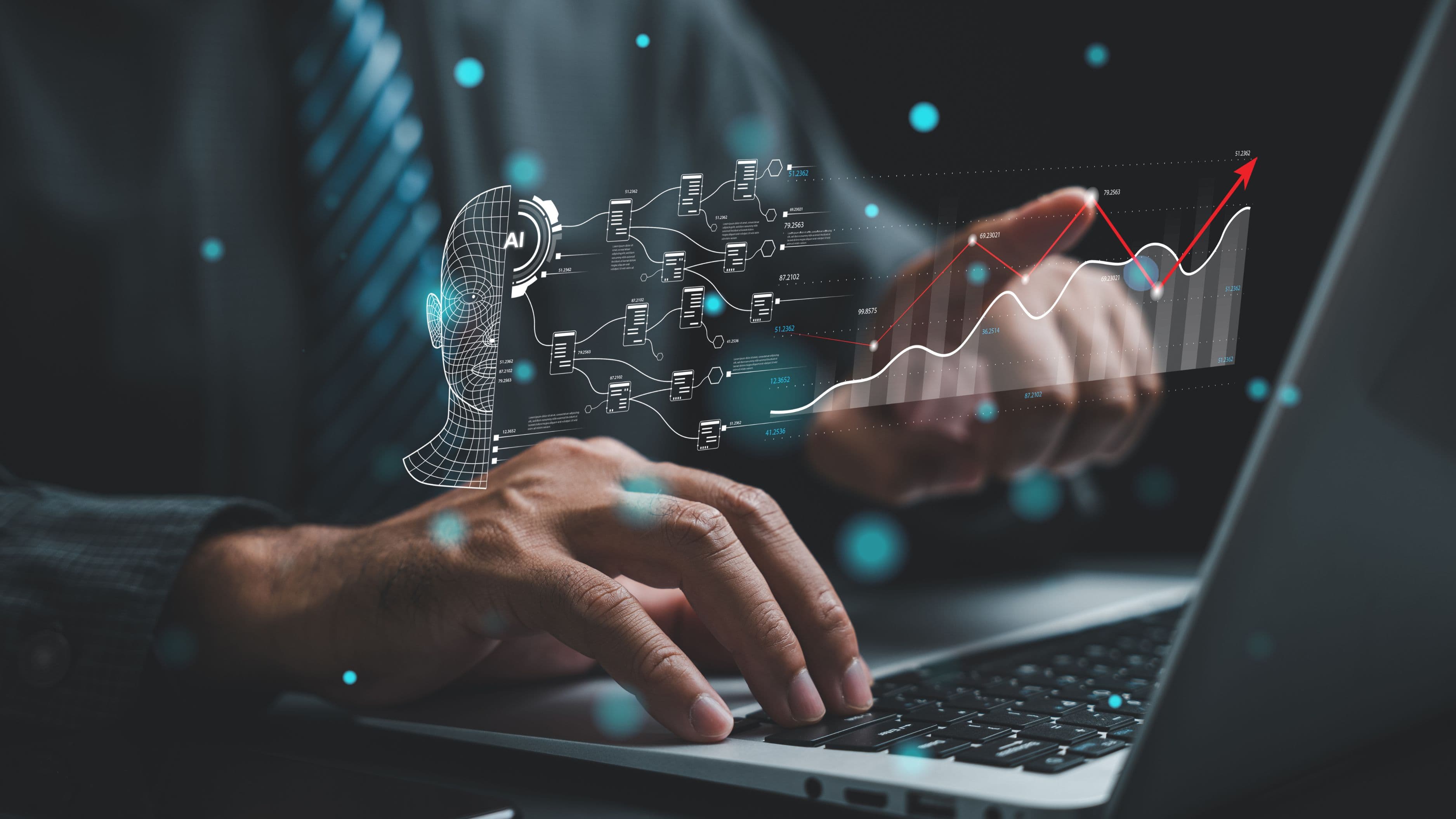
The core advantage AI brings to economic forecasting is not superior intelligence about how economies work. It's the ability to process vastly more data, faster, and to detect non-obvious correlations within that data that human analysts would miss or that traditional statistical models aren't built to capture.
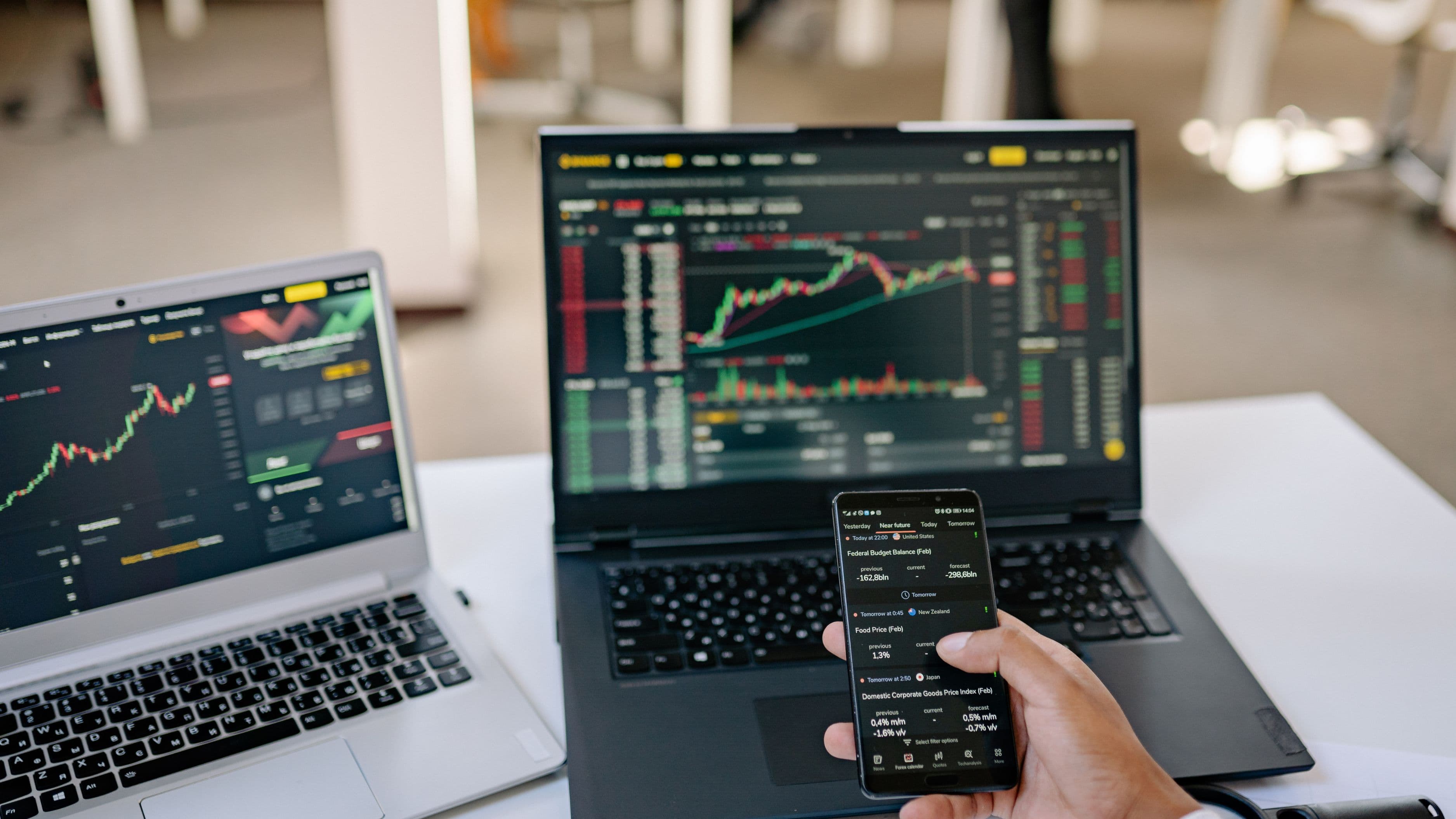
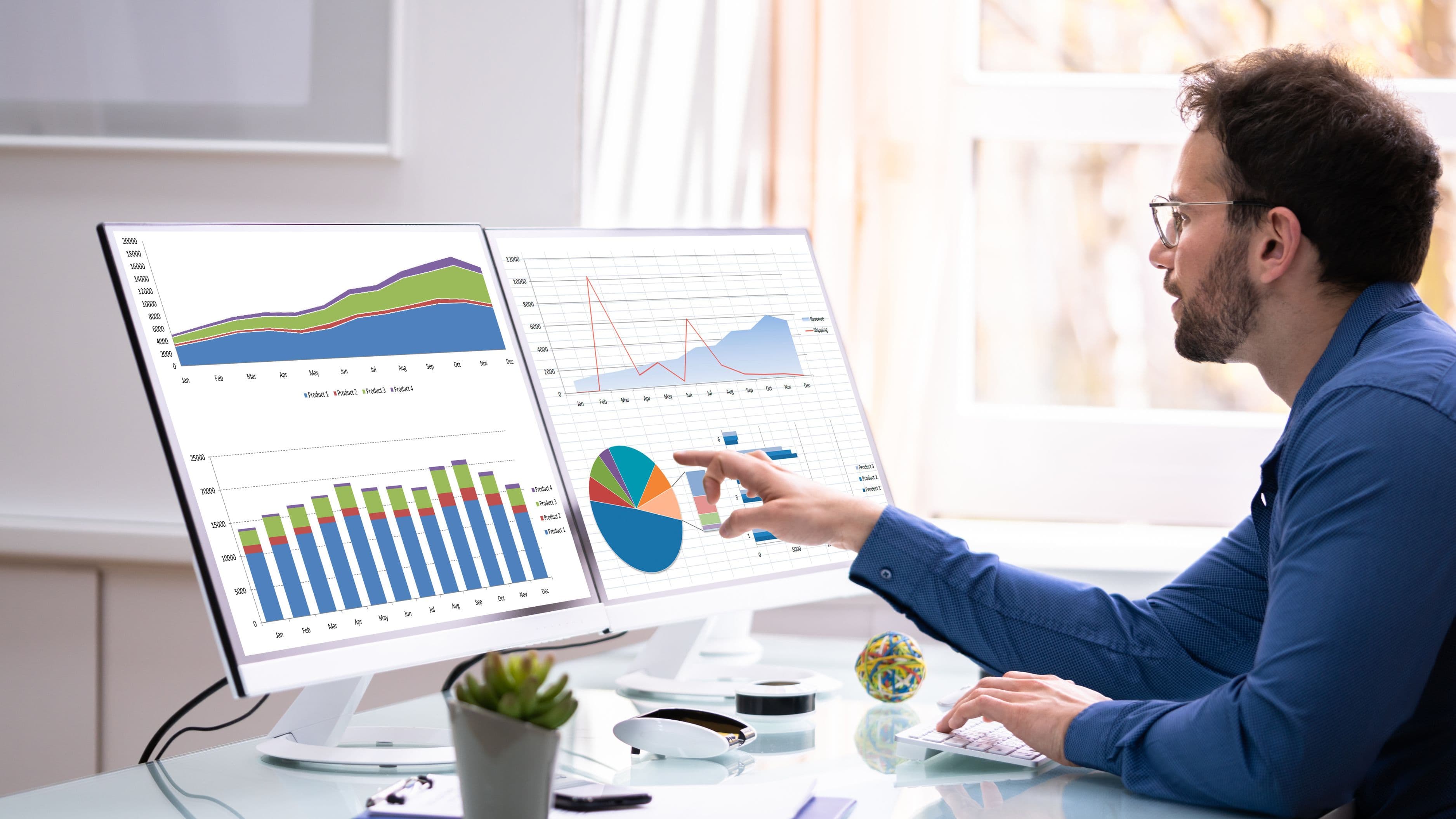
Machine learning models used in economic forecasting can ingest thousands of variables simultaneously – traditional economic indicators alongside satellite data tracking retail parking lot traffic, shipping container movements, electricity consumption by region, credit card transaction trends, job posting volumes across industries, and social media sentiment about financial stress. A human analyst can hold maybe a dozen variables in mind at once. A well-trained model can track thousands, updating its predictions in near real-time as new data comes in.
There's meaningful research backing this up. Studies published in journals like the Journal of Forecasting and work from institutions like the Federal Reserve Bank of Atlanta (which uses a model called GDPNow for near-real-time GDP tracking) and the International Monetary Fund have found that machine learning models can outperform traditional econometric models on short-horizon forecasts, particularly in fast-moving environments where high-frequency data matters. The Atlanta Fed's GDPNow, while not a pure machine learning system, demonstrated the value of frequent data updating over quarterly revision cycles.
The Evidence So Far: What AI Has and Hasn't Caught
There are genuine examples of data-driven early warning systems detecting economic stress ahead of official recognition. Alternative data providers like Quandl, Thinknum, and Bloomberg's alternative data division track indicators like job posting declines, satellite parking lot analysis, and credit stress signals in ways that have demonstrated predictive value in research settings.
During the early months of the COVID-19 economic shock in 2020, high-frequency data streams – restaurant reservation data from OpenTable, retail foot traffic from SafeGraph, credit card spending from Affinity Solutions – showed the economic collapse happening in real time, weeks before official data releases confirmed it. AI-driven models ingesting this kind of data were seeing the cliff before traditional indicators showed a slope.
That said, COVID was an externally triggered, extraordinarily rapid economic disruption – arguably the kind of event where high-frequency data provides the clearest advantage over lagging official statistics. Whether AI models perform as well at detecting the slower-building, more structurally complex dynamics that typically precede a traditional recessionary cycle is a harder and more contested question. The 2022–2023 period, when recession predictions were widespread and then persistently wrong, was not a triumphant moment for AI-driven forecasting either. The models were working with the same confusing, contradictory signals that stumped human forecasters.
The Real Limitations Worth Understanding
There are three limitations that matter specifically for how much you should rely on any AI-driven recession prediction.
The first is the training data problem. Machine learning models are trained on historical data. The US economy has experienced only a handful of recessions in the modern era, each with distinct causes and dynamics – the dot-com crash, the 2008 financial crisis, the COVID shock, the inflationary surge of the 1970s. The patterns that preceded each recession were different. A model trained primarily on past recessions may be poorly equipped to detect a novel configuration of risk that doesn't closely resemble any historical precedent. This is the same limitation that affects traditional models, but it's worth being explicit about.
The second is the signal-to-noise problem. The more data you throw at a model, the more false correlations it can find. A model that identifies 500 variables correlated with past recessions is also going to generate predictions that reflect spurious patterns that happened to coincide with historical downturns by chance. Separating genuine signal from noise in high-dimensional economic data is an unsolved technical challenge, not a solved one.
The third is the feedback loop problem. If AI models become widely used in financial markets and their recession predictions become publicly known, markets will react to those predictions – which can either accelerate or forestall the predicted outcome. A widely publicized AI-generated recession forecast could trigger the credit tightening and investment pullback that causes a self-fulfilling downturn. Or it could trigger a policy response that prevents it. This makes the predictive accuracy of any model partly a function of how widely its outputs are adopted, which is a strange and unstable foundation for reliability.
What This Actually Means for Your Money
The question most people really want answered isn't whether AI can theoretically detect recessions – it's whether this changes anything about how you should manage your finances in response to economic uncertainty.
The practical answer: probably not as much as the hype suggests, but in one specific way, yes. The real-time economic data tracking that AI systems have accelerated is genuinely useful for staying more current on economic conditions than quarterly GDP releases allow. Following indicators like the Atlanta Fed's GDPNow model, weekly jobless claims, the Conference Board's Leading Economic Index, and credit card spending data (which several research institutions now publish with short lags) gives you a more up-to-date picture of economic trajectory than waiting for official figures.
What AI-driven forecasting doesn't give you is a reliable recession alarm that you should use to time major financial decisions. Selling your investments when an AI model flags recession risk, then buying back in after the all-clear, requires the model to be right about both the timing of the downturn and the timing of the recovery. The historical evidence on recession timing – even from human experts – is that getting both right is extremely rare. Getting one right and the other wrong often results in worse outcomes than simply staying invested.
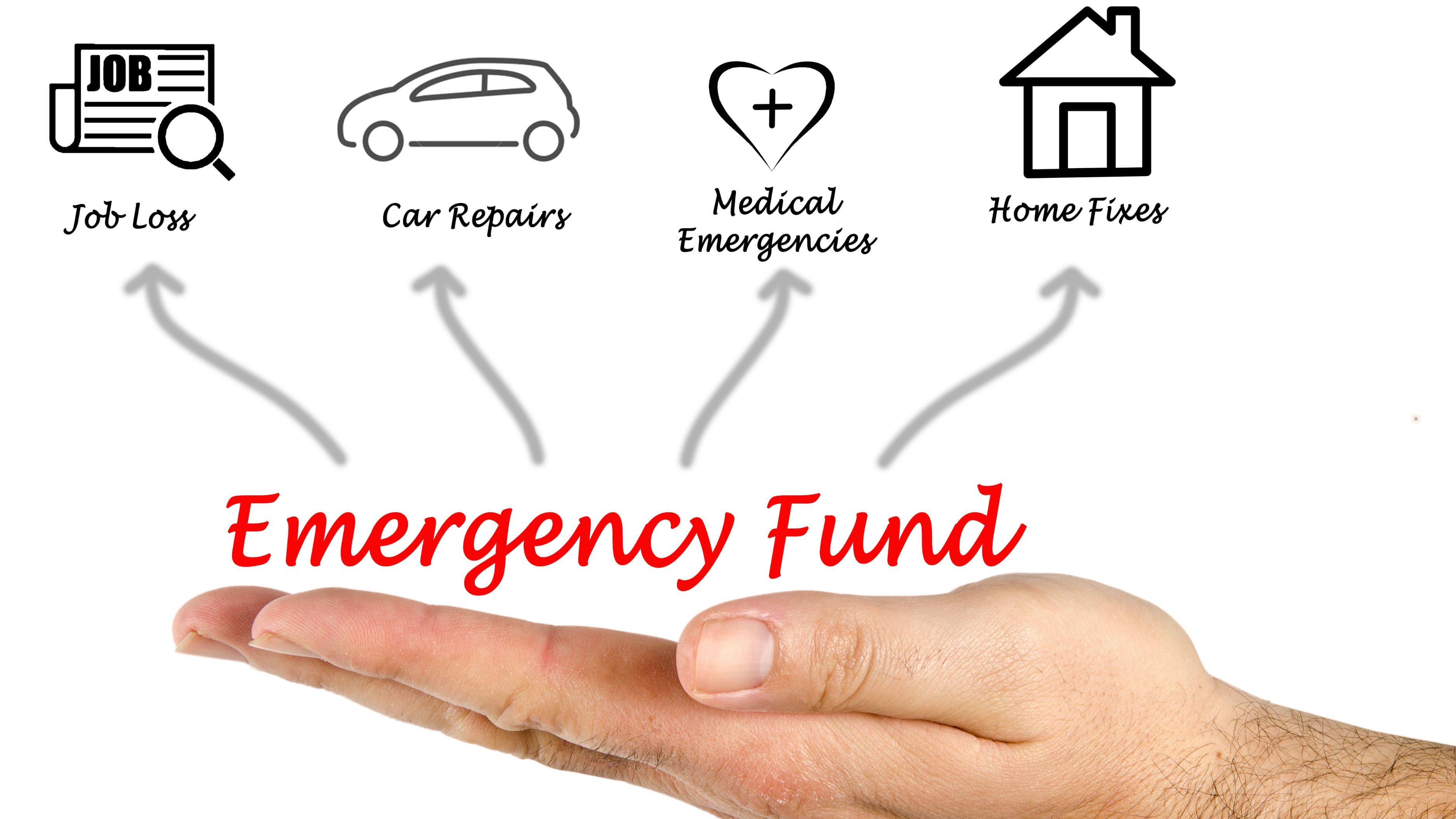
The more durable takeaway is structural rather than predictive: maintaining an emergency fund, keeping your investment portfolio diversified, avoiding overextension on debt during expansion periods, and not making major leveraged financial commitments based on confidence that the good times will continue indefinitely. These habits protect you regardless of whether any particular recession forecast – AI-generated or otherwise – turns out to be right.
Key Takeaways
AI is genuinely improving certain aspects of economic forecasting, particularly the speed and breadth of data integration and real-time tracking of high-frequency indicators. It has demonstrated meaningful advantages over traditional models in some research settings and during fast-moving disruptions like COVID. It has not demonstrated reliable superiority in predicting the timing of traditional business cycle recessions, and it shares many of the same structural limitations that make recession forecasting hard for everyone. The financial decisions most worth making in response to economic uncertainty remain the boring, structural ones that don't depend on prediction accuracy at all.
FAQ
Are there AI tools ordinary people can use to track recession risk? Yes, though most are more data dashboards than AI predictors. The Atlanta Fed's GDPNow (free, updated frequently) tracks real-time GDP estimates. The Conference Board's Leading Economic Index is widely followed. Bloomberg and Trading Economics publish dashboards tracking multiple leading indicators. None of these should be used as timing signals for investment decisions.
Did AI predict the 2008 financial crisis? No widely deployed AI system predicted the 2008 financial crisis in a way that was actionable or publicly available at the time. In retrospect, alternative data and some quantitative models showed stress signals, but the systemic risks embedded in mortgage-backed securities were complex enough that even sophisticated human analysts with access to relevant data missed them.
Do central banks and governments use AI for economic forecasting? Yes, increasingly. The Federal Reserve, the Bank of England, the IMF, and the ECB all use machine learning tools as part of their research and forecasting infrastructure. These complement rather than replace traditional econometric models, and the outputs inform but don't determine policy decisions.
Can AI predict stock market crashes along with recessions? Stock market crashes and recessions don't always align – markets often fall before a recession is officially declared and recover before it ends. AI models face the same timing uncertainty for market crashes as for recessions, with the additional complication that markets incorporate expectations, making them especially sensitive to the feedback loop problem mentioned above.
Should I change my investments based on AI recession forecasts? Generally no, and especially not based on any single forecast or model. If an AI-generated recession signal causes you to reconsider your portfolio allocation, the more useful prompt is to assess whether your current allocation is appropriate for your timeline and risk tolerance in any environment – not whether the next 12 months specifically will be a downturn.
📚 Sources
Federal Reserve Bank of Atlanta – GDPNow Model Explained: https://www.atlantafed.org/cqer/research/gdpnow
IMF – Predictive Analytics and Machine Learning in Economics (Working Paper): https://www.imf.org/en/Publications/WP/Issues/2020/05/08/World-Economic-Outlook-Databases-49344
Journal of Forecasting – Machine Learning Methods in Economics (overview): https://onlinelibrary.wiley.com/journal/1099131x
Conference Board – Leading Economic Index Methodology: https://www.conference-board.org/topics/us-leading-indicators
Brookings Institution – Can Big Data Predict Economic Downturns: https://www.brookings.edu/articles/artificial-intelligence-and-the-economy/