What's Actually Happening
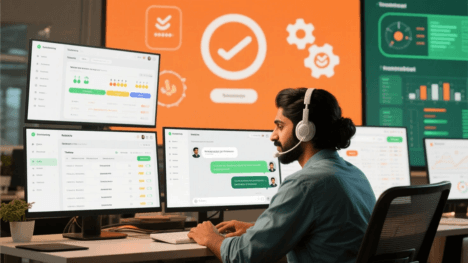
AI chatbots and salary research tools have become genuinely useful for the preparation phase of salary negotiation, specifically around gathering and organizing information. You can ask an AI tool to help you understand typical compensation ranges for your role, industry, and location based on publicly available data, draft talking points for a negotiation conversation, or role-play through likely questions a manager might ask. Several dedicated negotiation-prep tools have also emerged that combine AI chat interfaces with structured frameworks for building your case.
This represents a real shift from where salary negotiation prep stood even a few years ago, when this kind of structured practice and research typically required either a paid coach or considerable independent research across scattered sources. AI has effectively lowered the barrier to entry for the preparation work that used to separate confident negotiators from underprepared ones.
Why It Matters for Your Money
Being underprepared in a salary negotiation has a real, quantifiable cost. Accepting a lower initial offer, or failing to make a strong case for a raise, doesn't just affect your income once – it typically compounds over your career, since future raises and job offers are often calculated as a percentage of your current salary. A stronger, better-prepared negotiation conversation early in a role or during a raise discussion can meaningfully affect your earning trajectory over years, not just the immediate paycheck.
This is exactly where AI's practical value shows up: it can help close the preparation gap that often causes people to walk into these conversations without solid market data or a clearly organized case for their ask. The tools aren't doing the negotiating for you, but they can meaningfully improve how ready you are when the actual conversation happens.
What AI Can Genuinely Help With
Market research is one of the clearest use cases. Asking an AI tool to help synthesize publicly available salary data for your specific role, experience level, and location gives you a faster starting point than manually searching multiple salary websites and trying to reconcile inconsistent numbers yourself. This doesn't replace checking dedicated salary databases directly, but it can help you organize and interpret that information more efficiently.
Practicing the actual conversation is another area where AI adds real value. You can role-play a negotiation scenario with an AI chatbot, having it respond as a hesitant manager or push back on your ask, which gives you a low-stakes way to rehearse your responses before the real conversation. This kind of practice has genuine value, similar to how rehearsing for an interview builds comfort and reduces the likelihood of freezing up when it actually matters.
AI can also help you organize and articulate your case clearly – turning a rough list of accomplishments into a structured, persuasive summary of your value, or helping you draft a follow-up email that reinforces points made in a verbal negotiation. This kind of writing and organizing support genuinely reduces the friction of preparation, especially for people who find it hard to advocate for themselves in writing.
What AI Can't Actually Do for You
AI tools don't have access to your specific company's real internal budget constraints, your manager's actual negotiating flexibility, or non-public compensation data specific to your employer, meaning any numbers it suggests are estimates based on publicly available and often incomplete data, not verified figures. Treating an AI-generated salary range as a guaranteed, precise target is a mistake – it's a reasonable starting point for research, not a confirmed number you should present as fact.
AI also can't read the room during an actual live negotiation conversation, pick up on your manager's tone or hesitation, or adjust in real time the way a human negotiator naturally would. The actual moment of negotiation – reading pushback, deciding when to hold firm versus when to compromise, handling an unexpected counteroffer – still depends entirely on your own judgment and communication skills, not the tool you used to prepare.
It's also worth being cautious about AI-generated scripts that sound overly rehearsed or generic if used word-for-word in a real conversation. A skilled manager or HR representative can often tell when someone is reciting a memorized script rather than speaking authentically about their own value, which can undermine credibility rather than strengthen your position.
Practical Ways to Use AI for This Realistically
Use an AI tool to draft an initial outline of your accomplishments and value proposition, then revise it in your own voice so it sounds like you, not a generic template. This combines AI's organizational strength with the authenticity that only comes from your own phrasing and specific examples.
Cross-check any AI-suggested salary range against at least one dedicated salary database, since AI models can occasionally present outdated or overly broad estimates, especially for niche roles or rapidly changing markets. Treating AI output as one data point among several, rather than a single source of truth, protects you from walking into a negotiation with an inaccurate number.
Practice your actual talking points out loud with an AI chatbot playing devil's advocate, asking it to push back the way a hesitant manager might. This rehearsal is genuinely useful preparation, but plan to adapt your responses naturally in the real conversation rather than reciting memorized lines.
Keep your final ask and reasoning simple enough that you can explain it confidently without notes. If AI has helped you build a case so detailed and complex that you can't naturally summarize it yourself, it's worth simplifying before the actual conversation, since clarity and confidence typically matter more than sheer volume of supporting detail.
Risks and Limitations to Keep in Mind
Relying entirely on AI-generated salary figures without cross-referencing other sources risks anchoring your expectations to an inaccurate number, which can either lead you to ask for too little or make an unrealistic ask that damages your credibility. AI models are also trained on data that may not reflect very recent market shifts, particularly in fast-changing industries, so treating any AI-provided figure as current without verification is a real risk worth avoiding.
There's also a subtler risk worth naming: over-preparing with AI to the point of losing your own natural voice in the conversation. Negotiation ultimately involves a human relationship with your manager or a hiring team, and a conversation that feels authentic and specific to your actual contributions tends to land better than one that feels engineered, however well-organized the underlying preparation was.
Practical Takeaway
AI is a genuinely useful preparation tool for salary negotiation – helping with research organization, practice conversations, and clearly articulating your value – but it isn't a substitute for verified market data, your own judgment during the actual conversation, or the authenticity that makes a negotiation case convincing. The realistic approach is treating AI as a research and rehearsal assistant, not a negotiator standing in for you.
FAQ
Should I tell my employer I used AI to prepare for a negotiation? This isn't something you're generally expected to disclose, similar to how you wouldn't typically mention using a salary research website or a career coach. What matters in the actual conversation is your own case and delivery, not how you prepared for it.
Are AI-generated salary estimates accurate? They can be a reasonable starting point, but they're based on publicly available data and general patterns, not verified figures specific to your employer or exact situation, so cross-checking against dedicated salary databases is worth doing before relying on any single number.
Can AI actually negotiate on my behalf? Not in any practical sense for individual salary conversations – the actual conversation still requires your own real-time judgment, tone, and relationship with your manager or employer.
Is it worth paying for a dedicated AI negotiation tool versus using a free chatbot? This depends on how much structured guidance you feel you need. A free AI chatbot can handle research organization and practice conversations reasonably well for most people, while paid tools may offer more structured frameworks if you want additional guidance through the process.
📚 Sources
U.S. Bureau of Labor Statistics – Occupational Employment and Wage Statistics
Society for Human Resource Management – Salary Negotiation Guidance
Harvard Business Review – Research on Negotiation Preparation