


If you're thinking about buying this year, here's an honest breakdown of what it actually costs – upfront, monthly, and ongoing – so you can plan with real numbers instead of guesswork.
The Purchase Price Is Just the Starting Point
The home's list price is what you negotiate and agree on with the seller. But before you even reach closing, several layers of cost stack on top of that number, and most of them are non-negotiable.
The down payment is the most visible upfront cost. The conventional standard is 20% of the purchase price, which on a $400,000 home means $80,000 out of pocket before anything else. A 20% down payment avoids private mortgage insurance (PMI), which is an additional monthly cost charged when you put down less. Many buyers today use down payment assistance programs or FHA loans that allow as little as 3–3.5% down, which lowers the cash needed upfront but increases the monthly payment and adds PMI until you reach 20% equity. At 3.5% down on a $400,000 home, you're putting in $14,000 – a much more accessible number, but the long-term cost is higher.
Closing costs are where many buyers get caught off guard. These are the fees paid at the closing table to finalize the transaction, and they typically run 2–5% of the loan amount. On a $380,000 loan (a $400,000 purchase with a $20,000 down payment), that's $7,600–$19,000 in closing costs on top of your down payment. Closing costs include lender origination fees, title insurance, attorney fees where required, appraisal fees, prepaid property taxes and homeowner's insurance, and other transaction-related charges. Some of these are negotiable; many are not.
Altogether, a buyer purchasing a $400,000 home with a 10% down payment ($40,000) and mid-range closing costs ($12,000) needs roughly $52,000 in cash at closing – and that's before any immediate repairs or move-in expenses.
What Mortgage Rates Are Doing to Monthly Costs
This is where the affordability conversation has shifted most dramatically. Mortgage rates in 2021 sat near historic lows – around 3%. Buyers who locked in at those rates got a very different monthly payment than buyers entering the market today.
As of mid-2025, 30-year fixed mortgage rates are hovering in the 6.5–7.5% range depending on the lender, loan type, credit score, and down payment. That difference in rate has a substantial effect on monthly payment.
On a $360,000 loan (a $400,000 home with 10% down):
At 3%, the monthly principal and interest payment is approximately $1,518. At 7%, the same loan produces a monthly payment of approximately $2,395. That's an $877-per-month difference – over $10,000 per year – for the same home and the same loan balance, simply due to the rate environment.
This is why affordability calculators and pre-approvals from even two or three years ago are functionally useless today. The home price matters, but the rate is what determines whether the monthly number is actually manageable. Before you look seriously at any home, run your specific loan balance through a mortgage calculator with a current rate to understand your realistic monthly payment.
The Full Monthly Cost: More Than Just the Mortgage
The mortgage payment gets quoted as principal and interest, but what you'll actually pay each month is higher. Several items get bundled into your monthly housing cost, and they're not optional.
Property taxes are collected monthly as part of your escrow payment and paid to your local government annually. Property tax rates vary enormously by location – from under 0.5% of assessed value annually in some Southern states to over 2% in parts of the Northeast and Midwest. On a $400,000 home in a 1.2% tax rate area, that's $4,800 per year or $400 per month added to your payment.
Homeowner's insurance is also escrowed monthly in most conventional loans. Basic coverage on a $400,000 home typically runs $1,200–$2,400 per year depending on location, construction type, and coverage level – roughly $100–$200 per month. In areas prone to flooding, hurricanes, or wildfires, insurance costs can be significantly higher and sometimes requires separate specialized policies.
Private mortgage insurance (PMI) applies when your down payment is under 20%. PMI typically costs 0.5–1.5% of the loan amount annually, which on a $380,000 loan is roughly $1,900–$5,700 per year, or $158–$475 per month. It cancels automatically once you reach 22% equity in the home, but until then it's a real line item in your monthly cost.
Adding these together: on a $400,000 home purchased with 10% down at a 7% rate, a realistic all-in monthly cost looks something like this – principal and interest around $2,395, property taxes around $400, homeowner's insurance around $150, and PMI around $250 – bringing the total to approximately $3,195 per month. That's the number that matters for your budget, not the $2,395 quoted as the "mortgage payment."
HOA Fees: The Cost That Varies Wildly
If the home you're buying is in a community with a homeowners association – which includes most condos, many townhomes, and a significant share of newer single-family developments – HOA fees are a mandatory monthly expense on top of everything above.
HOA fees range from under $100 per month for basic neighborhoods with minimal shared amenities to $500–$1,000 or more for communities with pools, fitness centers, gated access, landscaping, and building maintenance included. Condo HOA fees tend to run higher because they typically cover exterior building maintenance and sometimes utilities.
Before making an offer on any HOA property, request the association's financial documents and current fee schedule. HOA fees can increase, and special assessments – one-time charges levied on all owners to cover major repairs to shared infrastructure – can add thousands of dollars in unexpected costs. A $400 monthly HOA fee sounds manageable; a $3,000 special assessment does not.
Ongoing Homeownership Costs That Don't Show Up in the Listing
The mortgage payment, taxes, insurance, and HOA cover the cost of ownership month to month. What most buyers underestimate is the ongoing cost of maintaining the home itself.
A commonly cited rule of thumb is to budget 1–2% of the home's value per year for maintenance and repairs. On a $400,000 home, that's $4,000–$8,000 per year – or $333–$667 per month set aside for things like HVAC servicing, plumbing issues, appliance replacements, roof repairs, and general upkeep. Older homes typically land toward the higher end of this range; newer construction less so, at least in the early years.
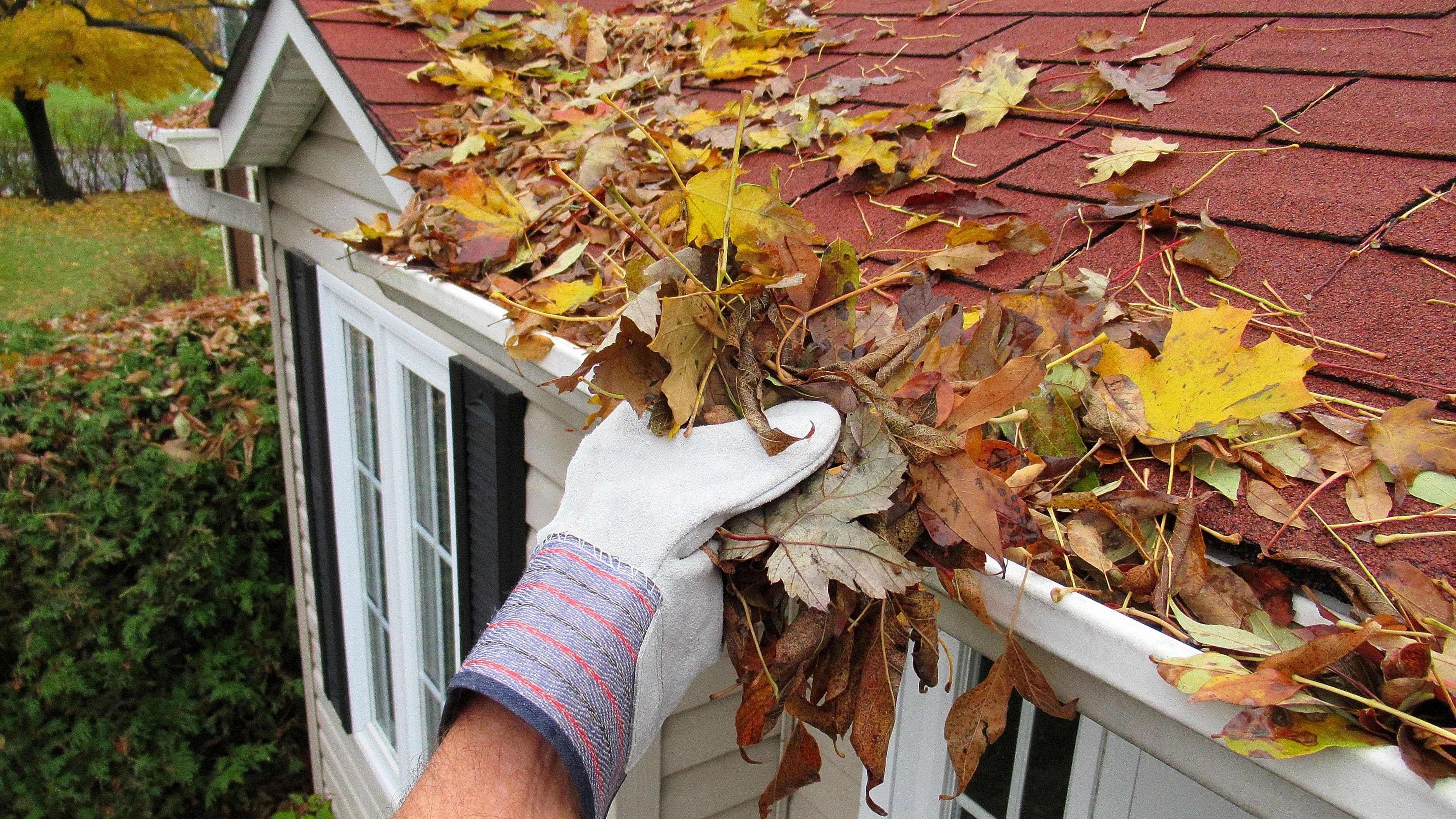
Some of these costs are predictable and scheduled – annual furnace servicing, gutter cleaning, exterior painting every several years. Others aren't – a water heater that fails without warning, a roof leak after a storm, a plumbing issue that requires immediate attention. Having a dedicated repair fund separate from your emergency fund prevents these from becoming financial crises.
Utility costs also increase meaningfully when you move from renting to owning, particularly if you're moving into a larger space. Heating and cooling a 2,000-square-foot home costs more than a 900-square-foot apartment, and unlike a rental, the full utility bill is yours. Budget for this difference in your monthly planning.
What Buyers Are Actually Paying in Today's Market
National median home prices as of early-to-mid 2025 are approximately $400,000–$420,000 according to recent data from the National Association of Realtors. However, that median masks significant regional variation. Markets in the Midwest and parts of the South remain more accessible, with median prices in the $250,000–$320,000 range in many metro areas. Coastal markets – particularly California, the Pacific Northwest, and the Northeast corridor – sit well above the national median, often in the $600,000–$900,000+ range for entry-level homes.
Buyer competition has cooled from the intensity of 2021–2022, but inventory in many markets remains tight enough that homes priced correctly are still selling within weeks and sometimes attracting multiple offers. The negotiating environment is somewhat more balanced than it was at the peak, which means buyers today have slightly more room to negotiate repairs, closing cost contributions, and in some cases price – but "buyer's market" would be an overstatement for most regions.
First-time buyers facing today's combination of elevated home prices and higher rates than the previous decade are working with a significantly compressed affordability window compared to buyers who purchased in 2019–2021. This isn't a reason not to buy if it makes sense for your specific situation, but it's a reason to go in with accurate numbers and realistic expectations.
How to Know What You Can Actually Afford
The traditional rule of thumb is that your total monthly housing costs should not exceed 28–30% of your gross monthly income. A stricter standard used by many financial planners is 25% of take-home pay, which is a more conservative and arguably more livable threshold once taxes and other expenses are factored in.
At a $3,200 all-in monthly housing cost, the 28% rule implies a gross annual income of roughly $137,000. That's a real constraint for many buyers in today's market, particularly first-time buyers earlier in their careers.
Getting pre-approved for a mortgage tells you the maximum you qualify for, but that ceiling is not your target number. Lenders will often approve you for more than is comfortable to actually pay. Run your own numbers – your actual take-home pay, your existing fixed expenses, what you genuinely want to set aside monthly for savings and retirement – before accepting the maximum approval amount as your budget.
The most useful exercise before you start home shopping seriously is to build a full monthly budget that includes all of the costs above at a realistic loan amount and rate, and confirm that what's left over is sufficient to live on without financial stress. If the numbers work, that's meaningful clarity. If they don't, it's better to know before you've fallen in love with a specific house.
Key Takeaways
The real cost of buying a home right now goes well beyond the purchase price. Upfront, you're looking at a down payment plus 2–5% of the loan amount in closing costs – potentially $50,000 or more in cash required to close on a $400,000 home. Monthly, the all-in payment including taxes, insurance, and PMI typically runs $500–$800 higher than the principal-and-interest figure quoted on a mortgage calculator. Ongoing, maintenance should be budgeted at 1–2% of the home's value per year. And if there's an HOA, that's an additional fixed monthly cost that won't go away.
None of this means buying is the wrong move. For many people, it's the right one. But walking in with accurate numbers – rather than discovering them at the closing table – is what makes the difference between a confident purchase and an overwhelming one.
FAQ
How much cash do I actually need to buy a home? At minimum with a 3.5% FHA loan and low end closing costs on a $400,000 home, you're looking at roughly $14,000–$20,000 in cash to close, plus reserves. With a 10% conventional down payment and mid-range closing costs, plan for $50,000–$55,000 in cash. Most lenders also want to see reserves of 2–3 months of mortgage payments in your account after closing.
Does buying make more financial sense than renting right now? It depends on your market, how long you plan to stay, and what rents are in your area. In markets where home prices are very high relative to rents, renting can be the more financially sensible option over a 5–7 year horizon. In markets where home prices are moderate and rents are high, buying can make sense sooner. The break-even point – how long you need to stay to recoup your transaction costs – is typically 4–7 years in most markets. If you're not planning to stay that long, renting often wins on pure math.
What credit score do I need for the best mortgage rate? Generally, a score of 760 or above qualifies you for the best available rates from most lenders. Scores between 680–759 still qualify for competitive rates, though slightly higher. FHA loans are available down to 580, but at reduced down payment terms. Improving your credit score before applying can meaningfully reduce your rate and long-term interest cost.
What's the difference between being pre-qualified and pre-approved? Pre-qualification is an informal estimate based on self-reported information. Pre-approval involves a lender reviewing your actual financial documents – income, assets, credit report – and issuing a conditional commitment to lend up to a specific amount. In today's market, sellers expect pre-approval letters with offers. Pre-qualification alone is not sufficient to make a competitive offer.
The Bottom Line
The cost of buying a home right now is real, multi-layered, and significantly shaped by where interest rates sit. Going in with a clear-eyed view of every cost – not just the purchase price – is what separates buyers who feel confident about their decision from those who feel stretched from the moment they close. Take the time to build the full monthly picture before you start shopping. The numbers will tell you clearly whether now is your moment or whether a bit more preparation is the smarter path.
📚 Sources
National Association of Realtors. (2025). Existing home sales and median price data. – https://www.nar.realtor/research-and-statistics/housing-statistics/existing-home-sales
Consumer Financial Protection Bureau. What is private mortgage insurance? – https://www.consumerfinance.gov/ask-cfpb/what-is-private-mortgage-insurance-en-1953/
Freddie Mac. Primary Mortgage Market Survey – weekly rate data. – https://www.freddiemac.com/pmms
U.S. Department of Housing and Urban Development. FHA loan requirements. – https://www.hud.gov/buying/loans
Consumer Financial Protection Bureau. What are closing costs? – https://www.consumerfinance.gov/ask-cfpb/what-are-closing-costs-en-1845/
Urban Institute. Housing Finance Policy Center – affordability research. – https://www.urban.org/policy-centers/housing-finance-policy-center