
This guide cuts through the hype in both directions. No breathless predictions about Bitcoin hitting a million dollars, and no dismissive "it's all a scam" framing either. Just a clear-eyed look at what crypto actually is, what the real risks are, and how to think about whether any of it makes sense for your money.
What Cryptocurrency Actually Is
Cryptocurrency is a form of digital money that exists on a decentralized network – meaning no central bank, government, or financial institution controls it. Transactions are recorded on a public ledger called a blockchain, which is essentially a database that is maintained simultaneously across thousands of computers worldwide. Because no single entity controls the ledger, it's extremely difficult to alter transaction records after the fact.
Bitcoin was the first and is still the largest by market value. It was designed as a peer-to-peer payment system – a way to transfer value directly between people without banks as intermediaries. Ethereum, the second-largest, expanded the concept by enabling "smart contracts," which are self-executing agreements written directly into the blockchain. That capability opened the door to decentralized applications, a wave of new tokens, and a lot of projects with varying degrees of legitimacy.
Today there are thousands of cryptocurrencies. Most of them are small, speculative, and unlikely to survive long term. A handful – Bitcoin, Ethereum, and a small number of others with genuine use cases or significant adoption – have established track records, though even those carry substantial volatility compared to traditional assets.
The key thing to understand is that crypto is not one thing. Buying Bitcoin is a different decision than buying a small altcoin with a two-month history and a cartoon logo. Treating them as equivalent because they're both "crypto" is like treating government bonds and a startup's equity as equivalent because they're both "investments."
Why People Buy It
Crypto attracts different buyers for different reasons, and understanding those motivations helps clarify whether any of them apply to your situation.
Some people buy Bitcoin specifically as a long-term store of value – a hedge against currency debasement and inflation, similar in concept to gold. The argument is that Bitcoin has a fixed supply cap of 21 million coins, unlike fiat currencies that central banks can print in unlimited quantities. Whether that argument holds as a long-term investment thesis is genuinely debated among serious economists and investors, but it's a coherent position rather than pure speculation.
Some people buy crypto because they believe the underlying technology – blockchain, smart contracts, decentralized finance – represents a significant shift in how financial systems will work, and they want exposure to that potential. This is a legitimate investment rationale, though the relationship between the success of the technology and the value of any specific coin or token is far less direct than it might appear.
Some people buy crypto because the price went up and they want in. This is the most common entry point and the most dangerous. Buying an asset primarily because it's been rising is chasing momentum, not investing. Most people who get burned by crypto enter during a period of rapid price gains and exit during the crash that follows.
And some people have legitimate transactional or philosophical reasons – using crypto for cross-border transfers, participating in decentralized applications, or preferring a financial system that doesn't depend on traditional banking infrastructure.
Knowing your own motivation matters. It shapes the right decision for your money.
The Real Risks – Not the Scary Version, the Accurate One
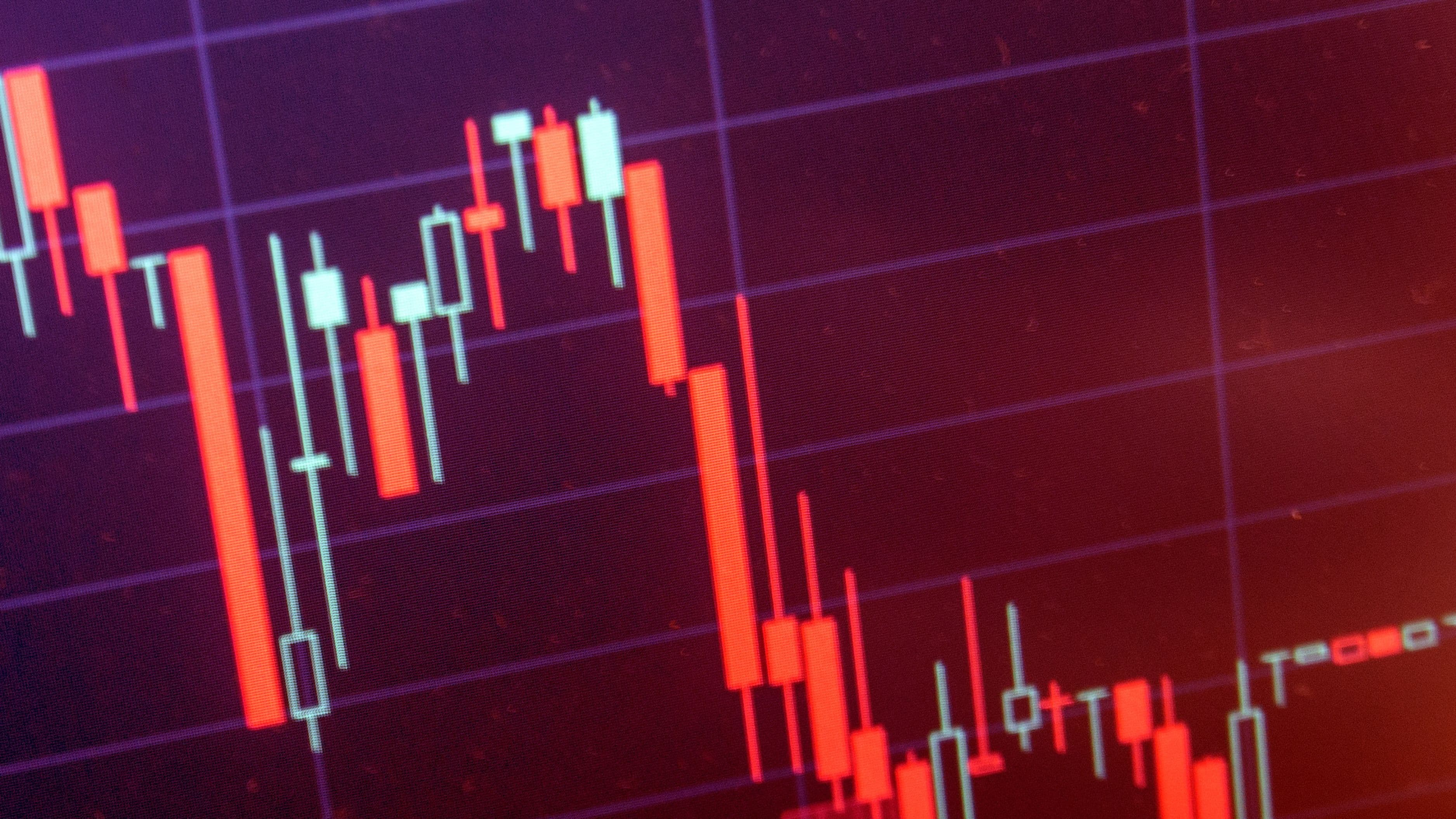
Volatility is the most visible risk. Bitcoin has historically experienced drawdowns of 70–80% from peak to trough multiple times in its history. Ethereum has had similar swings. Smaller tokens have lost 90–99% of their value in bear markets and never recovered. If you put money into crypto that you need within a defined time horizon – or that you simply couldn't afford to lose a significant portion of – the volatility alone is a serious problem regardless of where prices end up long term.
Regulatory risk is real and often underestimated. The legal and regulatory environment around crypto is still evolving in most major markets. Policy changes – around taxation, exchange licensing, self-custody rules, or specific asset classifications – can affect valuations significantly and can change the practical usability of assets you hold. This doesn't mean regulation will destroy crypto, but it does mean there are genuine unknowns that don't exist with traditional regulated assets.
Security risk is specific to crypto in a way it isn't with traditional finance. If you hold crypto on an exchange and the exchange is hacked or becomes insolvent, your funds are at risk. If you hold crypto in your own wallet and lose the private key or seed phrase, your funds are permanently unrecoverable. There is no FDIC insurance, no fraud protection, and no customer service line to call. The responsibility for security is entirely yours. This is manageable with education and care, but it's genuinely different from how bank accounts and brokerage accounts work.
Scams are widespread and sophisticated. Crypto's pseudonymous, irreversible transaction structure makes it a preferred tool for fraud. Fake exchanges, pump-and-dump schemes, rug pulls on new tokens, phishing attacks, and social engineering scams are all common. If someone approaches you with a crypto investment opportunity that promises high returns with low risk, that is a scam. The technology is real; many of the people promoting specific projects are not trustworthy.
What This Means for Your Money
Whether crypto belongs in your financial life depends on a few specific questions about your situation.
Have you handled the basics first? If you're carrying high-interest debt, don't have an emergency fund, or aren't contributing to a retirement account with an employer match, those are higher-priority uses of your money than crypto. Not because crypto is necessarily bad, but because the expected return on eliminating a 20% APR debt or capturing a 100% employer match outperforms most investment decisions you could make with that same money.
Can you afford to lose a significant portion of what you put in without it affecting your financial goals? This isn't a scare tactic – it's a practical filter. Crypto is a high-risk, high-volatility asset class. The position sizing should reflect that. Many financial advisors who are willing to include crypto in a portfolio suggest limiting it to 1–5% of total investable assets. That keeps the upside relevant if prices rise substantially, while limiting the damage to your overall financial picture if they fall sharply.
Are you prepared to hold through drawdowns without panicking? The investors who have done well with Bitcoin over long periods bought and held through multiple cycles of dramatic decline. The investors who've done poorly typically entered during peaks and sold during crashes. If you know that a 40–50% decline in the value of a position would cause you to sell it, that's important information about your actual risk tolerance – and it suggests either a smaller position or no position at all.
How to Buy Crypto If You Decide To
If you've thought through the above and want to allocate a small, deliberate amount, the mechanics are straightforward. Regulated cryptocurrency exchanges like Coinbase, Kraken, or Gemini allow you to create an account, complete identity verification, and purchase crypto with a bank transfer or debit card. These are the most accessible and regulated options for US-based buyers.
For most people, starting with Bitcoin or Ethereum – the two most established assets by market capitalization, liquidity, and history – is more sensible than reaching for smaller, newer tokens with potentially higher upside and much higher risk of going to zero.
Be clear about where you're storing it. Leaving crypto on an exchange is simpler but carries exchange-specific risk. Moving it to a hardware wallet (a physical device that stores your private keys offline) gives you direct custody but requires you to manage security carefully. For small amounts, leaving it on a reputable regulated exchange is acceptable. For larger amounts you intend to hold long term, learning about self-custody is worthwhile.
Dollar-cost averaging – buying a fixed amount on a regular schedule rather than investing a lump sum – reduces the risk of timing your entry at a peak. It doesn't eliminate volatility, but it smooths out the price at which you're accumulating over time.
Key Takeaways
Crypto is a legitimate asset class with real technology behind it and genuine risks that are different from traditional investments. The right amount to put into it – for most people – is a small percentage of investable assets, only after higher-priority financial foundations are in place, and only at a size you can genuinely afford to lose a significant portion of without it derailing your goals. Anyone promising you guaranteed returns or specific price targets is not a reliable source.
If you're interested, start small, use a regulated exchange, stick to established assets, and don't let anyone else's enthusiasm – or your own FOMO – drive the decision. Crypto is one tool in a larger financial picture, not a shortcut to financial freedom.
FAQ
Is crypto a good investment? It depends entirely on position size, time horizon, and what you compare it to. Bitcoin has outperformed most traditional assets over the past decade, but with dramatically higher volatility. As a small allocation in a diversified portfolio, it's a legitimate choice for some investors. As a large allocation or a substitute for financial planning basics, it carries substantial risk of significant loss.
Do I have to buy a whole Bitcoin? No. Bitcoin and most cryptocurrencies are divisible. You can buy as little as $10 worth of Bitcoin. You'd own a fraction of one coin, which works exactly the same as owning a whole one.
Is crypto income taxable? Yes, in the US. The IRS treats cryptocurrency as property. Selling crypto, trading it for another crypto, or using it to make a purchase are all taxable events. You owe capital gains tax on any profit, and you can deduct capital losses. If you receive crypto as income, it's taxed as ordinary income at its fair market value at the time you received it. Keep records of your transactions.
What's the difference between a coin and a token? A coin (like Bitcoin or Ether) runs on its own blockchain. A token is built on top of an existing blockchain – most commonly Ethereum – and typically represents something specific within an application or project. Tokens are generally more speculative and carry higher risk of going to zero if the underlying project fails.
What should I avoid as a first-time crypto buyer? Avoid buying new or obscure tokens based on online hype. Avoid leveraged trading (borrowing to buy crypto, which amplifies both gains and losses). Avoid sharing your seed phrase or private key with anyone for any reason. And avoid making large, sudden purchases based on a news event or price surge – that's how most people time the market badly.
📚 Sources
IRS – Virtual Currency Guidance: https://www.irs.gov/businesses/small-businesses-self-employed/virtual-currencies
SEC – Investor Bulletin: Initial Coin Offerings: https://www.sec.gov/oiea/investor-alerts-and-bulletins/ib_coinofferings
FDIC – What Crypto Users Should Know About FDIC Insurance: https://www.fdic.gov/consumers/assistance/protection/deposits/crypto.html
Consumer Financial Protection Bureau – Cryptocurrency and Digital Assets: https://www.consumerfinance.gov/consumer-tools/cryptocurrency/
Coinbase – Learn: What Is Bitcoin?: https://www.coinbase.com/learn/crypto-basics/what-is-bitcoin