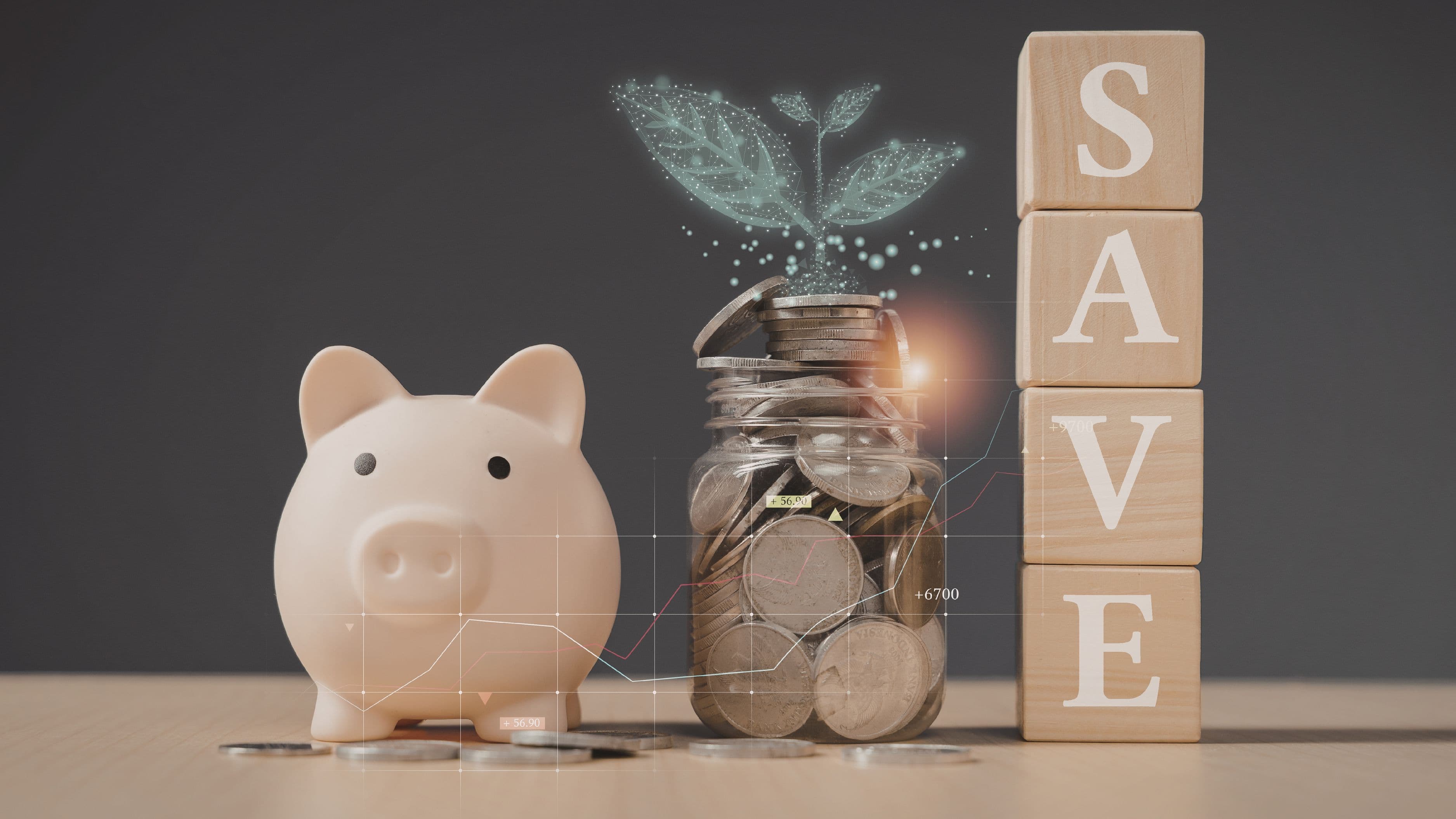



The good news is that the habits responsible for most of that leakage are small enough to change without rewriting your entire lifestyle. You don't need a budget overhaul or a financial planner. You need a few targeted behavioral shifts that, done consistently, quietly accumulate real savings over the course of a year.
Here are five that actually hold up.
1. Do a Weekly 10-Minute Spending Review
Most overspending happens in the dark – money leaves the account and the full picture doesn't register until the bank statement arrives at the end of the month. A weekly 10-minute review changes that by keeping the picture current.
The habit itself is simple: once a week, open your bank or card app, scan the last seven days of transactions, and flag anything that surprised you or felt unnecessary in retrospect. No spreadsheet required. The goal isn't meticulous categorization – it's awareness. When you see that you spent $47 at Target for things you don't quite remember and $31 on food delivery in a single week, those numbers tend to self-correct. Visibility is the mechanism, not willpower.
Over a year, this habit consistently surfaces subscription charges that are easy to forget – the streaming service you signed up for during a free trial, the premium app tier you upgraded to once and never needed again, the gym add-on you haven't used since January. The average US household spends around $90 per month on subscription services, according to research from C+R Research, and most people significantly underestimate that number. Catching and cutting two or three forgotten subscriptions alone can save $200 to $400 annually. That's before you factor in the general spending awareness effect, which compounds through every other category.
What this means for your money: A year of weekly reviews takes roughly eight hours total and can save several hundred dollars with minimal behavioral change beyond the reviews themselves.
2. Make Coffee at Home on Weekdays
This one has become a cliché – but it keeps showing up in financial advice because the math is real, and because the habit is more manageable than people assume once they actually try it.
A daily coffee shop order at $5 to $7 per visit (which is conservative in most cities once you account for a latte or specialty drink) runs $1,250 to $1,750 a year on a five-day-a-week habit. A quality home coffee setup – a decent drip machine or a French press, plus good beans – costs roughly $100 to $200 upfront and $20 to $40 per month to run well. That's $340 to $680 a year all in. The difference is $600 to $1,000 annually, without giving up the coffee itself.
The habit doesn't have to be absolute. If your morning coffee shop stop is part of a genuine routine you value – you like the walk, the barista knows your order, it's a real anchor to your day – keep it on certain days and cut it on others. Even a three-day-a-week reduction saves $400 to $600 a year depending on your usual spend. The point isn't deprivation; it's shifting the default so that home coffee is the habit and the coffee shop is the occasional treat, rather than the reverse.
What this means for your money: Even a partial shift toward home coffee – not necessarily an all-or-nothing change – can generate several hundred dollars in annual savings with an upfront cost that pays back within a couple of months.
3. Eat Out With a Weekly Budget Instead of On Impulse
Dining out is one of the largest and most variable spending categories for most households, and it's also one of the most emotionally driven. The Thursday night takeout isn't a planned decision – it's a response to tiredness, an empty fridge, or the path of least resistance at the end of a long week. Those spontaneous decisions are where the budget drifts.
The habit to build isn't "eat out less" – it's "eat out intentionally." Set a weekly dining budget before the week starts rather than trying to limit yourself in the moment. If your current dining-out spending is around $300 a month (which is below average for many households), deciding in advance that $200 is the number – and planning for that rather than discovering the overspend at the end of the month – puts you in control of the decision before it happens.
A complementary habit is one planned batch cooking session per week. Even cooking two or three dinners on Sunday reduces the number of "I don't know what to make" moments that default to delivery or takeout during the week. It doesn't need to be elaborate – a pot of soup, a grain bowl situation, a protein and some roasted vegetables – just enough to take the friction out of a few weeknight decisions. Over a year, reducing impulse dining by even $80 a month adds up to nearly $1,000.
What this means for your money: Shifting from reactive to planned dining decisions – without eliminating restaurants from your life – is one of the higher-leverage savings habits available to most people, because dining out tends to be both frequent and variable.
4. Use a 24-Hour Rule for Non-Essential Purchases
Impulse purchases rarely feel like impulse purchases in the moment. They feel like good deals, reasonable treats, or things you've been meaning to get. The 24-hour rule creates a simple speed bump between the impulse and the transaction.
The rule works like this: for any non-essential purchase above a threshold you define – $30, $50, whatever feels meaningful for your situation – you wait 24 hours before buying. If you still want it the next day, you buy it without guilt. If you've forgotten about it or the urge has passed, you've saved that money. That's the entire habit.
The research on this is consistent: desire for discretionary purchases decreases significantly when there's a time gap between the impulse and the decision. A 2021 study published in the Journal of Consumer Research found that delaying purchase decisions reliably reduced spending on non-essential items. In practical terms, most people who apply this rule find that roughly 30 to 50 percent of the purchases they initially wanted to make don't survive the 24-hour pause. If you're currently spending $200 a month on spontaneous non-essential purchases, cutting that by 30 percent saves $720 a year. Cut it by half and you're over $1,000.
The habit is also self-reinforcing: the more often you wait and find the desire has passed, the less often you'll feel the immediate urgency to act on the next impulse. The gap between want and buy becomes more natural over time.
What this means for your money: The 24-hour rule doesn't restrict what you spend money on – it just changes the timing slightly and filters out the purchases you didn't really want in the first place. The money you save is money you would have spent without any lasting satisfaction from it.
5. Automate a Small Transfer to Savings on Payday
Saving money by deciding what's left at the end of the month doesn't work for most people, because the money usually isn't there by the time the decision comes up. The months where nothing goes to savings are rarely months where you spent more than usual on things that mattered – they're months where the money was absorbed by small, forgettable decisions before you got to it.
Automating a savings transfer on the day you get paid reverses the sequence. The money moves to savings before you see it in your spending account, which means it's never part of the spending decision in the first place. Most banks allow you to set up a recurring automatic transfer to a savings account with a specific dollar amount and a specific date – payday is the most effective timing.
Start with an amount that feels almost too small – $25 or $50 per paycheck if you're not currently saving anything. The goal at this stage isn't the amount; it's establishing the behavior. Once the transfer is automatic and you've adjusted to having slightly less in your checking account without noticing much difference, increase it. Many people find they can increase the amount several times in the first year before they actually feel the constraint. At $50 per paycheck on a biweekly pay schedule, you're at $1,300 by the end of the year without ever making a conscious monthly decision to save.
For better returns on that growing balance, move it to a high-yield savings account (HYSA). Most major online banks – Ally, Marcus by Goldman Sachs, Discover, and others – currently offer meaningfully higher rates than traditional savings accounts, which means your accumulated savings earn something while they sit.
What this means for your money: Automating savings is the single most reliable way to build a savings habit, because it removes the decision that most people consistently get wrong. You're not relying on discipline at the end of the month – you're relying on a system that runs without you.
Key Takeaways
None of these five habits requires a dramatic change to how you live. They work because they operate at the margin – adjusting defaults, adding small friction to impulsive decisions, removing friction from smart ones, and making the financial picture visible enough to be actionable.
A weekly spending review alone might save $300. Shifting one or two coffee shop visits per week to home-brewed might save $400. Planning dining rather than defaulting to takeout might save $500 or more. The 24-hour rule on impulse purchases might save $600. Automated savings of $50 a paycheck builds $1,300 in a year without any monthly decision-making. These aren't additive in a strict sense – your totals will depend on your current habits – but the math for crossing $1,000 in genuine annual savings is readily achievable without giving up anything that materially affects quality of life.
Start with one. When that one feels natural, add another. That's how habits actually stick.
Frequently Asked Questions
Is $1,000 a year a realistic target just from small habits? For most people, yes – and often more. The figures quoted in each habit above are conservative estimates based on average household spending in those categories. If your dining-out or impulse spending is higher than average, the savings potential is proportionally larger.
What's the best first habit to start with? The weekly spending review is the natural starting point because it creates visibility that makes every other habit easier to build. Once you see the actual pattern of where your money goes, the habits that are most relevant for your specific situation become obvious.
Should I use a budgeting app to support these habits? A budgeting app can help with the spending review habit and visibility in general. Apps like Mint (now redirecting to Credit Karma), YNAB, and Copilot automate transaction tracking and categorization, reducing the friction of the weekly review. That said, none of these habits requires an app – a bank's built-in transaction history is sufficient to start.
Does automating savings affect my credit score? No. Transferring money between your own accounts has no impact on your credit score. Only credit-related activity (credit card use, loan payments, hard inquiries) affects credit.
What if I genuinely don't have $50 to automate into savings? Start with whatever you do have – $10 or $20 per paycheck is a real amount that builds a real habit. The behavioral mechanism works at any amount. Once the spending review habit reveals forgotten subscriptions or reduced impulse purchases, the available amount for savings typically grows without any additional effort.
📚 Sources
C+R Research – Subscription Service Spending Study: https://crresearch.com/blog/subscription-economy-in-the-era-of-choice
Bureau of Labor Statistics – Consumer Expenditure Survey (Dining Out and Food Categories): https://www.bls.gov/cex
Bankrate – High-Yield Savings Account Comparison: https://www.bankrate.com/banking/savings/best-high-yield-interests-savings-accounts
Journal of Consumer Research – Time Delays and Impulse Purchase Decisions: https://academic.oup.com/jcr
USDA Economic Research Service – Food Away from Home Spending Data: https://www.ers.usda.gov/topics/food-choices-health/food-consumption-demand/food-away-from-home
Consumer Financial Protection Bureau – Saving Money: Getting Started: https://www.consumerfinance.gov/consumer-tools/save-and-invest