
What an ETF Actually Is
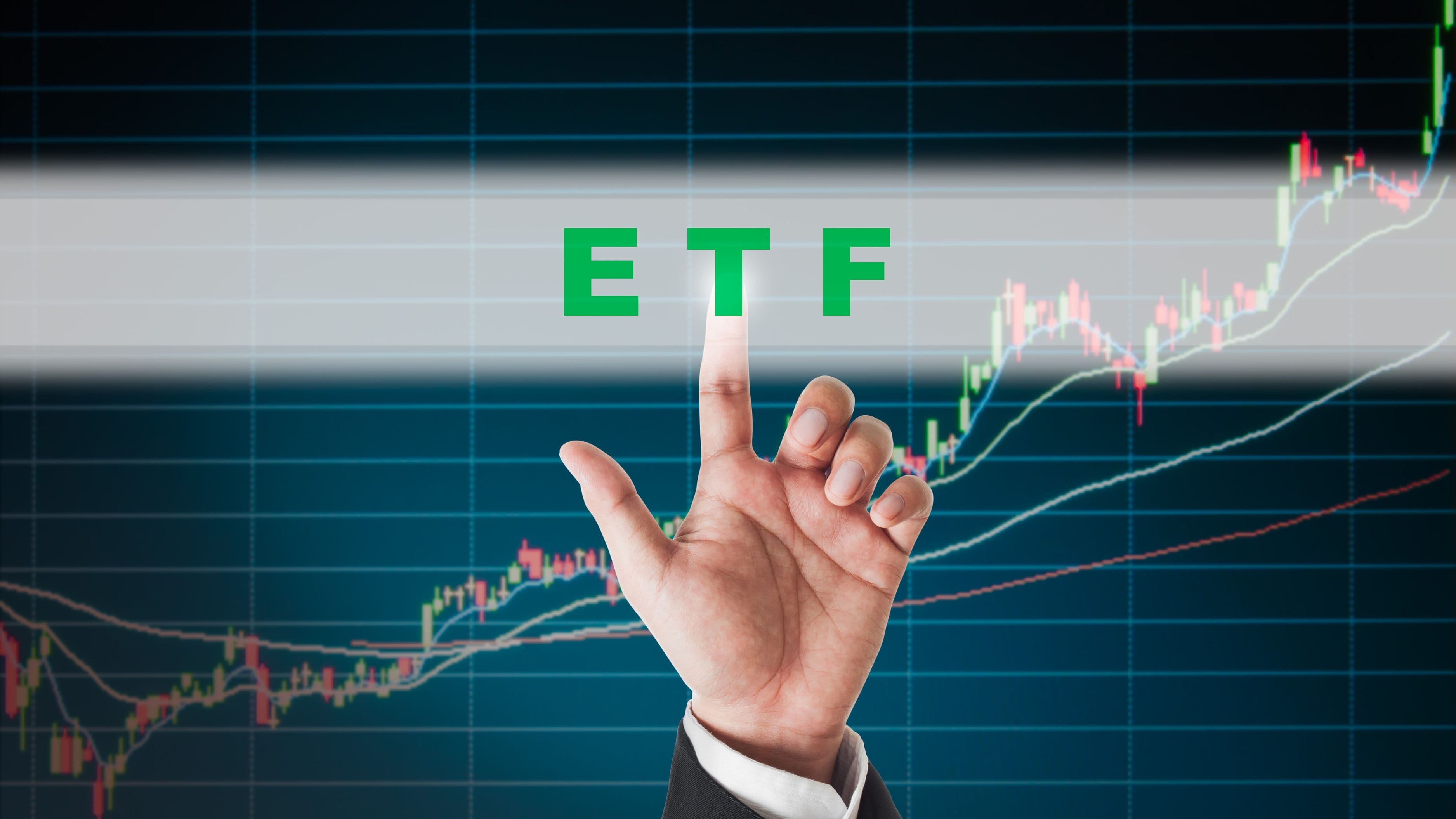
An ETF, or exchange-traded fund, is a basket of investments, typically stocks, bonds, or a mix of both, bundled into a single fund that trades on a stock exchange just like an individual stock. Instead of buying shares of one company, buying a share of an ETF gives you partial ownership across every holding inside that fund, instantly spreading your money across dozens, hundreds, or even thousands of underlying investments depending on the fund.
Most ETFs are designed to track a specific index, like the S&P 500, meaning the fund simply holds the same companies in roughly the same proportions as that index, rather than having a manager actively picking and choosing investments. This passive, index-tracking structure is a big part of what makes ETFs both simple to understand and relatively low-cost to own.
Why ETFs Became So Popular
The shift toward ETFs reflects a broader, well-documented trend in investing: actively managed funds, where a manager tries to beat the market through stock selection, have historically struggled to consistently outperform simple index-tracking strategies after accounting for fees. Multiple long-term studies tracking active fund performance have found that the majority of actively managed funds underperform their benchmark index over extended periods, particularly once fees are factored in.
That data shifted both professional and everyday investor behavior over time. If a low-cost, simple index fund tends to perform competitively or better than a fund charging higher fees for active management, the rational move for many investors is to choose the cheaper, simpler option rather than betting on a manager's ability to consistently beat the market.
What This Means for Your Money
The practical appeal of ETFs comes down to a few concrete advantages that matter directly to your bottom line. Lower expense ratios are one of the biggest factors, since many broad-market ETFs charge annual fees well under 0.10%, compared to actively managed mutual funds that often charge 0.5% to 1% or more. Over decades of investing, that fee difference compounds into a meaningful gap in your final account balance, even if the underlying performance were identical.
Diversification is the other major factor. Buying a single ETF that tracks a broad index spreads your risk across many companies and sectors instantly, rather than concentrating your money in a handful of individual stocks where one bad outcome could meaningfully hurt your portfolio. This built-in diversification is part of why ETFs are frequently recommended as a foundational holding, especially for people who don't want to spend hours researching individual companies.
ETFs also offer flexibility that some other investment vehicles don't. Because they trade on an exchange throughout the day like a stock, you can buy or sell at any point during market hours, unlike traditional mutual funds, which only price and execute trades once per day after the market closes.
Real-World Example
Consider two hypothetical investors each putting $500 a month into the market over 30 years. One chooses a broad market index ETF charging a 0.05% annual fee, while the other chooses an actively managed mutual fund charging 1% annually, assuming both achieve the same average annual return before fees. The fee difference alone, compounded over three decades, can result in a meaningfully different final balance, often tens of thousands of dollars apart, simply due to the gap in ongoing costs.
This example illustrates why so many financial professionals emphasize fees as one of the few truly controllable factors in long-term investing. You can't control market returns, but you can control how much of those returns get eaten up by costs along the way.
Risks and Limitations
ETFs aren't risk-free, and it's worth being clear-eyed about what they don't solve. A broad market ETF still carries the same fundamental market risk as the index it tracks, meaning your investment can lose value during a downturn just as any stock-based investment would. Diversification reduces company-specific risk, but it doesn't eliminate broader market risk tied to economic conditions.
Not all ETFs are simple, low-cost, broad-market funds either. Some ETFs use leverage, focus on narrow sectors, or employ more complex strategies that carry higher risk and higher fees than the typical index-tracking fund most recommendations are referring to. It's worth understanding exactly what an ETF holds and how it's structured before assuming it carries the same risk profile as a basic, broad-market option.
There are also practical considerations like bid-ask spreads and trading costs, which can matter more for less liquid, niche ETFs than for highly traded, broad-market funds. For most long-term, buy-and-hold investors, this is a minor factor, but it's worth being aware of if you're considering a more specialized or lower-volume ETF.
Practical Takeaway
If you're building a long-term investment strategy and want broad market exposure without picking individual stocks or paying high management fees, a low-cost, broad-market ETF is a reasonable foundational choice for many investors, which is exactly why it gets recommended so consistently. Before choosing one, check the expense ratio, confirm what index or sector it tracks, and make sure it matches your actual investment goals and risk tolerance rather than simply choosing the most talked-about option.
It's also worth remembering that "popular" doesn't mean "one-size-fits-all." Your specific timeline, risk tolerance, and financial goals should guide which ETF, or combination of ETFs, makes sense for your situation, rather than assuming any single recommendation applies universally.
Key Takeaways
ETFs bundle many investments into a single, exchange-traded fund, offering instant diversification and typically lower fees than actively managed alternatives. The fee difference between ETFs and actively managed funds compounds significantly over long time horizons, which is a major reason they're so widely recommended. Not all ETFs carry the same risk level, so it's worth understanding what a specific fund actually holds before investing. A broad-market ETF can serve as a reasonable foundation for a long-term portfolio, but your personal goals and risk tolerance should still guide the final decision.
FAQ
Are ETFs safer than individual stocks? ETFs reduce company-specific risk through diversification, but they still carry overall market risk, so they're generally considered less risky than holding a single stock, though not risk-free.
Can I lose money investing in an ETF? Yes – ETFs can lose value if the underlying index or sector they track declines, so they should be viewed as a long-term investment vehicle rather than a guaranteed source of returns.
How do I choose between different ETFs? Compare the expense ratio, the index or sector the fund tracks, its historical performance relative to its benchmark, and how well it aligns with your specific investment goals and timeline.
Are ETFs better than mutual funds? ETFs often have lower fees and more trading flexibility than actively managed mutual funds, but the better choice ultimately depends on your specific goals, since some mutual funds, particularly index funds, offer similarly low costs.
📚 Sources
U.S. Securities and Exchange Commission – Exchange-Traded Funds (ETFs) - https://www.investor.gov/introduction-investing/investing-basics/investment-products/mutual-funds-and-exchange-traded-1
S&P Dow Jones Indices – SPIVA U.S. Scorecard - https://www.spglobal.com/spdji/en/research-insights/spiva/