
What "Free" Actually Means in This Space
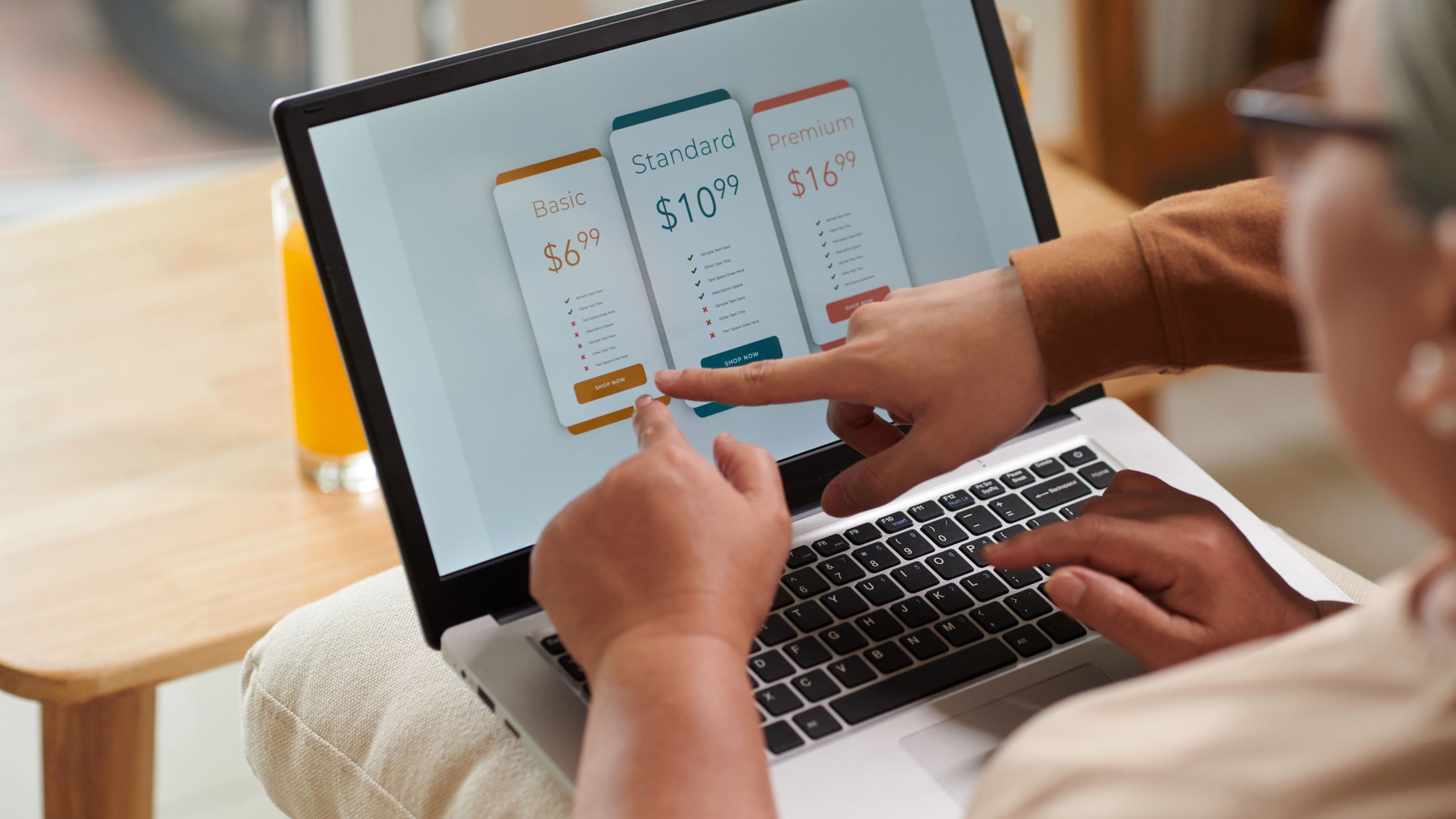
When a tool is genuinely free, it's usually because the company is monetizing something else – your data, your attention, or your eventual conversion to a paid plan. Most free AI finance tools fall into a few categories: apps built on ad revenue and data partnerships, freemium products where the free tier is a funnel toward premium subscriptions, tools backed by financial institutions that benefit when you use their products, and early-stage startups burning investor capital while they figure out their business model.
None of these models are inherently sinister, but each one has different implications for your data and your privacy. An app that shares aggregated spending data with advertisers or financial partners is operating within legal boundaries while still using your financial behavior as a product. Understanding which category a tool falls into tells you a lot about how to think about the security trade-off you're making.
What Data These Tools Actually Collect
The specific data collected varies by tool, but the range is wider than most people expect. To function, AI financial tools typically need at minimum your basic account information and spending data. Many request read-only access to your bank accounts and credit cards via third-party data aggregators like Plaid or MX. Some go further and request income data, investment account details, tax information, or even login credentials (though reputable tools avoid direct credential capture and use OAuth token connections instead).
The phrase "read-only access" reassures a lot of people, and it does reduce some risks – the app theoretically can't initiate transactions on your behalf. But it doesn't mean the data is safe from breach, misuse, or sale. Your complete transaction history, recurring bill amounts, subscription patterns, account balances, and income deposits paint an extremely detailed picture of your financial life. That picture is valuable, which is precisely why companies want access to it.
The Real Security Risks Worth Understanding
Data breaches are the most direct risk. Any service that holds your financial data is a target. The question isn't whether a company takes security seriously – most claim to – it's whether their infrastructure is robust enough to withstand a determined attack and whether their breach response policies protect you. Smaller startups in this space may have limited security budgets and less mature data protection practices than established financial institutions. When a breach happens, you're dealing with the fallout on real financial data, not generic contact information.
Third-party data sharing is often underread. Privacy policies are long for a reason. Many free finance tools reserve the right to share anonymized or aggregated data with partners, advertisers, or data brokers. The word "anonymized" sounds protective, but research has consistently shown that financial transaction data can be de-anonymized with relatively little additional information. A study from MIT found that just four data points – approximate location, time, and spending amount – could uniquely identify 90% of individuals in a dataset. Your "anonymized" spending data may not be as anonymous as the policy implies.
Persistent data retention is underestimated. When you delete an account with a free finance app, your data rarely disappears immediately or completely. Many services retain data for months or years for various stated purposes – analytics, compliance, legal holds. The question of what happens to your historical financial data when you leave a service is one most users never ask until it's too late to matter.
AI-specific risks add a newer dimension. Tools using generative AI components introduce an additional consideration: when you type financial questions into a chatbot interface, that conversation data may be used to train future models, logged for review, or retained on servers with different security standards than your transaction data. The line between "the tool analyzed my data" and "my conversation about my money became training data" isn't always clear.
What Actually Makes a Tool Trustworthy
Security claims are easy to make and hard to verify, but there are concrete signals worth looking for before connecting any financial account to a new tool.
Regulatory compliance and institutional backing are meaningful markers. Tools built by or in partnership with FDIC-insured banks, FINRA-registered advisors, or SEC-registered investment platforms operate under regulatory oversight that creates accountability. They're subject to examination, have compliance obligations, and carry more reputational risk if they mishandle data. A fintech startup with no institutional backing and no regulatory oversight isn't necessarily unsafe, but it carries more uncertainty.
SOC 2 Type II certification is the gold standard for data security in this category. It means an independent auditor has reviewed the company's security controls, availability, and data handling practices and found them to meet a defined standard. Reputable tools in this space will state this certification clearly in their security documentation. If a tool can't tell you what security certifications it holds, that's a meaningful signal.
OAuth-based bank connections through established aggregators (Plaid, MX, Finicity) are safer than giving any app your actual banking credentials. These aggregators have their own security infrastructure, are regulated under various state and federal frameworks, and have established breach protocols. The connection they create is tokenized – if the token is compromised, it can be revoked without exposing your actual login information.
A clear, plain-language privacy policy that specifies what data is collected, who it's shared with, how long it's retained, and how you can delete it is a basic expectation. Vague policies full of broad carve-outs ("we may share your data with trusted partners") are a warning sign. The willingness to be transparent about data practices correlates with the seriousness of the commitment to protecting them.
What This Means for Your Money
The practical risk isn't that a free AI finance app will directly drain your bank account – read-only access doesn't enable that, and reputable tools don't have that access at all. The more realistic risks are more diffuse: a data breach that exposes your financial profile to identity thieves, persistent data retention that continues long after you stop using the service, or data sharing practices that contribute to targeted financial fraud schemes that use your spending patterns against you.
None of this means you should avoid AI finance tools entirely. Used thoughtfully, they offer genuine utility – better visibility into spending patterns, automated tracking that would take hours manually, and accessible financial guidance that used to require paying an advisor. The goal is to use them on your terms, with your eyes open to what you're exchanging for the convenience.
How to Protect Yourself Without Giving Up the Tools
A few concrete steps that reduce your exposure without requiring you to abandon tools you find genuinely useful.
Start by giving the minimum access required. If a budgeting app only needs to read your checking account to track daily spending, don't connect your investment accounts, savings accounts, and credit cards just because it offers to aggregate everything. Each additional account you connect expands the attack surface if the service is ever compromised.
Use a dedicated email address when signing up for financial apps. This prevents a breach of the app's user database from linking to your primary email, and it makes it easier to track which services you've signed up for and revoke access cleanly when you stop using them.
Audit your connected apps periodically through your bank's settings panel. Most major banks and credit card companies now show you which third-party apps have been granted account access, and you can revoke that access at any time. Dormant connections to tools you no longer use are an unnecessary risk – disconnect them.
Read the data deletion policy before signing up, not after. Most services have an account deletion or data erasure process described in their privacy policy or help documentation. Knowing what that process looks like before you connect an account means you know your exit options from the start.
Finally, apply more scrutiny to newer, unverified tools than to established ones. A budgeting feature inside your existing bank's mobile app carries vastly different risk than a standalone startup you found through a social media ad. The former is already holding your data under regulatory supervision; the latter is an unknown quantity.
Key Takeaways
Free AI finance tools can be genuinely useful, but "free" usually means your data is part of the value exchange. The most realistic risks are data breaches, opaque third-party sharing, and long-term data retention after you stop using the service – not direct account access. Before connecting any financial account, check for SOC 2 certification, OAuth-based connections through established aggregators, and a clear privacy policy. Give minimum required access, audit connected apps regularly, and know how to delete your data if you walk away. The tools aren't the problem – using them without understanding the trade-off is.
FAQ
Is connecting my bank account to an AI budgeting app safe?
It depends on the app and how the connection is made. Tools that use established aggregators like Plaid or MX and connect via OAuth tokens (not your actual credentials) are meaningfully safer than those that request your username and password directly. Additional signals worth checking: SOC 2 certification, institutional backing, and a clear privacy policy. No connection is zero-risk, but reputable tools with strong security infrastructure carry much lower risk than unknown startups.
What happens to my data if a free finance app shuts down?
This varies by company. Some startups in this space have folded and sold their user data to other companies as part of asset liquidation – which is usually disclosed in the privacy policy but rarely read. Before signing up for any service, check the privacy policy for language about what happens to your data if the company is acquired or ceases operations. This is one of the better arguments for sticking to tools with established institutional backing.
Can a read-only connection to my bank account result in financial loss?
Not through the connection itself – read-only access prevents transaction initiation. The financial risk comes through downstream exposure: if the app experiences a breach and your financial profile is exposed, that information can be used for identity theft, account takeover attempts at other institutions, or targeted phishing. The direct connection isn't the vector; the data exposure is.
Are paid AI finance tools significantly safer than free ones?
Payment alone doesn't determine security. A paid tool has a business model that doesn't rely on data monetization, which removes one incentive for aggressive data sharing. But a paid tool run by a small company with weak security infrastructure can still experience breaches. The meaningful security markers – SOC 2 certification, aggregator-based connections, transparent privacy policies – matter more than price.
How do I check if an AI finance app is legitimate before signing up?
Look for SOC 2 Type II certification in their security documentation, check whether they use an established aggregator (Plaid, MX, Finicity) for bank connections, read the data sharing and retention sections of the privacy policy, and search for any documented security incidents or regulatory actions. For investment-related tools, check FINRA BrokerCheck (brokercheck.finra.org) to verify registration status.
📚 Sources
Federal Trade Commission – Protecting your personal information: a guide for business: https://www.ftc.gov/business-guidance/resources/protecting-personal-information-guide-business
Consumer Financial Protection Bureau – Understanding your data rights under Section 1033: https://www.consumerfinance.gov/rules-policy/final-rules/personal-financial-data-rights/
Plaid – Security overview and data practices: https://plaid.com/safety/
AICPA – SOC 2 overview and what it means for data security: https://www.aicpa-cima.com/resources/landing/system-and-organization-controls-soc-suite-of-services
MIT Media Lab – De-anonymization of financial data research (Montjoye et al., Science 2015): https://www.science.org/doi/10.1126/science.1256297
FINRA BrokerCheck – Verify financial tool and advisor registration: https://brokercheck.finra.org/
National Cybersecurity Alliance – Data privacy and connected apps guide: https://staysafeonline.org/resources/data-privacy/