
Handling an emergency without going into debt is possible in more situations than people realize. It requires a clear head, a fast inventory of your actual options, and the willingness to do a few things that feel uncomfortable in the moment. Here's how to work through it systematically.
Step 1: Stop and Quantify the Actual Problem
The first thing a financial emergency does is generate anxiety, and anxiety is the enemy of good decision-making. Before you do anything else, force yourself to put a specific number on what you're dealing with. "I need to fix my car" is not a financial emergency. "I need $1,200 to replace the transmission in the next two weeks or I lose my job" is a financial emergency – and it's one you can actually solve.
Write down the specific amount you need, when you need it by, and what the consequence is if you don't have it. This matters because many financial emergencies turn out to be smaller or more flexible than they feel in the initial moment of panic. A medical bill that feels overwhelming may have a payment plan option. A landlord who seems immovable about rent may have more flexibility than you assume. Quantifying the actual problem is step one because it tells you the size of the gap you need to close – which determines which of the following steps are relevant to your situation.
Step 2: Check What You Already Have Access To
Before looking for money outside your current situation, take a thorough inventory of what's already available to you. Most people underestimate this.
Your checking and savings accounts are the obvious starting point, but go further. Do you have a Roth IRA? You can withdraw your contributions (not earnings) from a Roth IRA at any time, at any age, without taxes or penalties – because those contributions were already taxed. This is one of the most consistently underused emergency tools for people who've been investing in a Roth. The key distinction: contributions only, not earnings. If you've put in $8,000 over several years and your account is now worth $11,000, you can pull out up to $8,000 without penalty.
Beyond retirement accounts, think about assets that could be sold quickly without major loss: unused electronics, furniture, sports equipment, clothing, or tools. Facebook Marketplace, eBay, and local buy-sell groups have made this faster and easier than it used to be. A single afternoon of listing items can often generate several hundred dollars within 48–72 hours. It's not a comfortable option, but it's debt-free and often faster than people expect.
Also check whether you have any subscriptions, memberships, or services you're currently paying for that you could pause or cancel immediately. This won't solve a $2,000 emergency, but it may free up $100–$300 in your next billing cycle, which can meaningfully reduce the gap you need to fill.
Step 3: Contact the Source of the Emergency Directly
This step gets skipped constantly, and it's often the highest-leverage move available. The institution or person you owe money to – a hospital, a landlord, a utility company, an auto repair shop – frequently has options they don't advertise and won't volunteer unless you ask.
Hospitals and medical providers almost universally have charity care programs and hardship payment plans for people who ask for them. A $3,000 ER bill that feels impossible may be reducible to a much smaller number through a charity care application, or payable at $50–$100 per month through an interest-free payment plan. The catch: you have to ask. Call the billing department, explain your situation honestly, and ask specifically about financial assistance programs and extended payment terms.
Landlords, particularly individual property owners rather than large management companies, often have more flexibility than tenants assume. If you've been a reliable tenant, a direct, proactive conversation – before the payment is missed – about a short-term payment arrangement is far more likely to get a positive response than ignoring the issue and hoping it resolves itself. The same logic applies to utility companies, who are frequently required by state regulation to offer payment plans for customers facing hardship.
The important word in all of these conversations is "proactive." Reaching out before you've missed a payment puts you in a much stronger negotiating position than reaching out after the fact.
Step 4: Look at Your Income Side, Not Just Your Expenses
Most emergency financial planning focuses entirely on the expense side – cutting spending, finding money, stretching what you have. The income side often gets overlooked because it feels slower or less certain, but for many people it's the fastest route to closing the gap without debt.
Think about what you can do in the next 7–14 days to generate cash. Overtime or extra shifts at a current job, if available, is the fastest option. Gig work through platforms like DoorDash, Instacart, or Uber can generate cash in as little as a day or two after signing up – these aren't long-term income strategies, but for a one-time financial gap they can be genuinely useful. Skilled freelancers in fields like writing, design, coding, or bookkeeping can often pick up a short-term project through their network or platforms like Upwork quickly enough to matter for a near-term financial deadline.
The mindset shift here is important: you're not building a side hustle, you're filling a specific gap. Even $300–$500 in fast cash on the income side can reduce your debt exposure significantly or eliminate it entirely, depending on the size of the emergency.
Step 5: Consider Interest-Free Borrowing Before Debt
If you've exhausted your own resources and income options and still have a gap to fill, your next step should be interest-free borrowing – not a credit card, not a personal loan.
This means asking family or friends for a short-term loan with a clear, written repayment plan. This is an uncomfortable option for many people, and the discomfort is legitimate – mixing money with personal relationships creates risk that you need to take seriously. But the financial math is clear: borrowing $1,000 from a family member at zero percent interest and repaying it in three months is categorically better than borrowing $1,000 on a credit card at 24% APR. If you go this route, put the terms in writing, pay it back exactly as agreed, and don't ask twice if the answer is no.
Some employers also offer payroll advances or emergency loans to employees as a benefit – this is worth checking with HR if your employer is large enough to offer it. Several fintech platforms have also built earned wage access products (like DailyPay and Payactiv) that allow workers to access a portion of already-earned wages before payday. These are not loans – they're advances on income you've already earned – and many integrate directly with employer payroll systems.
Finally, 0% APR introductory credit card offers are a legitimate interest-free borrowing tool for people with good enough credit to qualify. If you can pay off the balance before the promotional period ends – typically 12–18 months – you've effectively borrowed for free. The risk is carrying a balance past the promotional period, at which point interest charges often apply retroactively or at high standard rates.
Common Mistakes That Turn an Emergency Into a Debt Problem
Taking the first credit offer available without comparing options is one of the most costly mistakes in a financial emergency. Payday loans, cash advance apps with high fees, and buy-now-pay-later plans for emergency expenses all carry costs that compound the problem. A $400 payday loan that costs $60 in fees and rolls over once is already a $520 debt on a $400 emergency.
Waiting too long to act is another pattern that turns manageable situations into serious ones. A landlord who hears from you on day one of a financial problem is almost always more flexible than one who has to chase you down. A medical bill that's 30 days past due is much easier to negotiate than one that's been sent to collections.
And paying off a financial emergency slowly on a high-interest credit card while maintaining other non-essential spending is the most common way a short-term crisis becomes a months-long debt that costs significantly more than the original emergency.
Key Takeaways
A financial emergency doesn't automatically mean debt. The faster you quantify the actual gap, the faster you can match it to the right solution. Talking to the source of the emergency directly – before missing a payment – frequently opens doors that aren't visible from the outside. Your existing assets, from Roth IRA contributions to items around the house, may close more of the gap than you expect. Short-term income moves are often faster than people assume. And if you do need to borrow, interest-free options almost always exist and should be exhausted before taking on interest-bearing debt.
FAQ
What counts as a financial emergency? A financial emergency is an unexpected, necessary expense that can't be covered by your current cash flow and has a real consequence if not addressed – loss of housing, transportation, employment, or health. It's distinct from a financial inconvenience (an unexpected expense that's stressful but manageable) and from a financial problem that's been building over time. The category matters because it determines what response is proportionate.
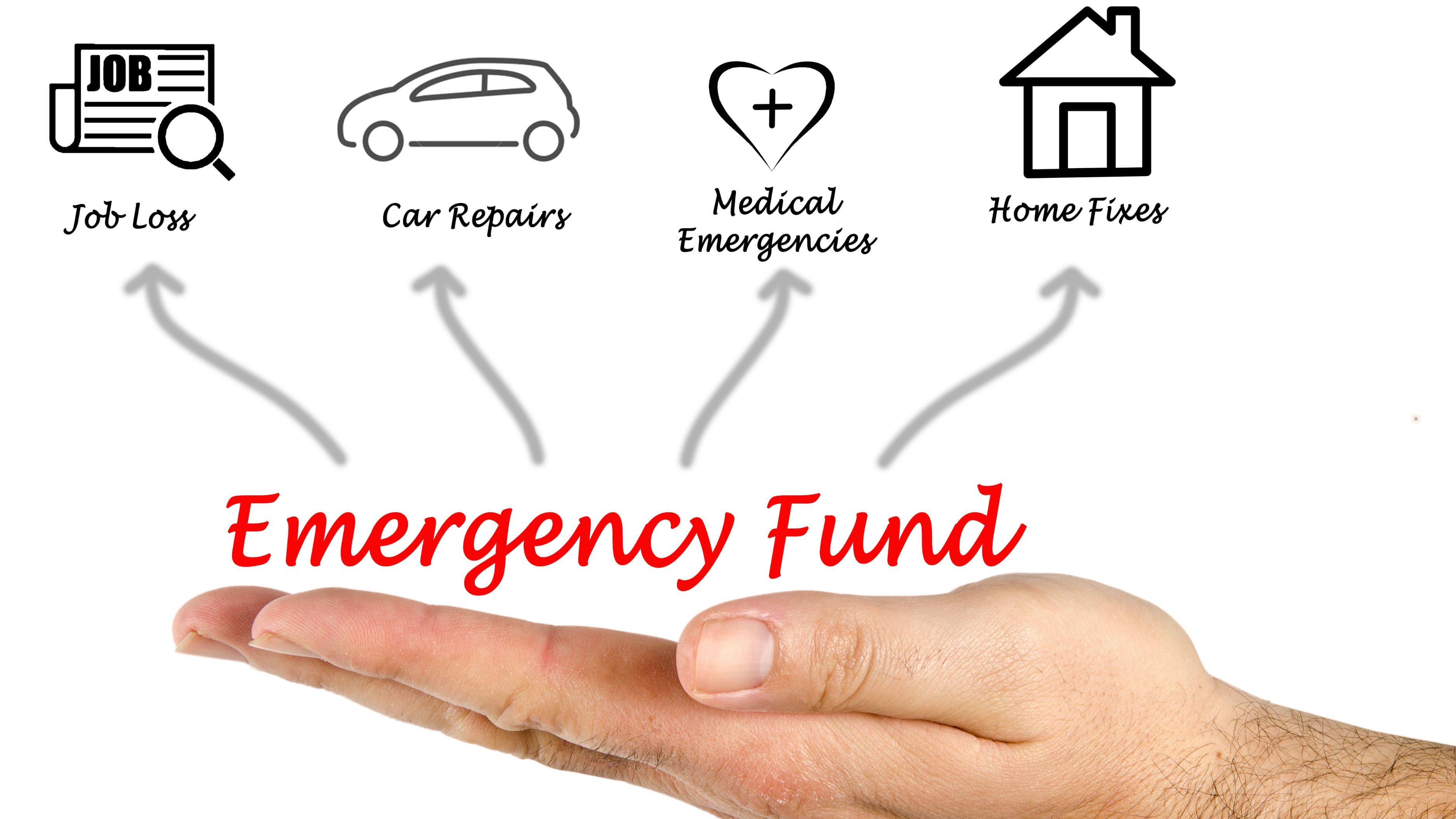
Should I use my emergency fund for a financial emergency? Yes – that's exactly what it's for. If you have a dedicated emergency fund, a genuine emergency is the correct time to use it. The psychological resistance many people feel to spending their emergency fund is understandable, but preserving it while taking on high-interest debt is the worse financial outcome. Use the fund, then rebuild it methodically over the following months.
How quickly can I access Roth IRA contributions? Withdrawal requests from a Roth IRA are typically processed within 3–7 business days depending on the custodian. Some brokers offer faster timelines. This isn't an instant-access option, so it works best for emergencies where you have at least a week of runway.
Is it ever worth taking a personal loan for a financial emergency? A personal loan from a reputable lender – not a payday lender – at a reasonable interest rate is preferable to high-interest credit card debt if you genuinely have no other option. The key is comparing the total cost of the loan (APR plus fees) against your other options and having a realistic repayment plan before you take it. A personal loan with a 12% APR that you repay in six months is a much better outcome than a 24% APR credit card balance that lingers for two years.
📚 Sources
IRS – Roth IRA Withdrawal Rules: https://www.irs.gov/retirement-plans/roth-iras
Consumer Financial Protection Bureau – What to Do in a Financial Emergency: https://www.consumerfinance.gov/consumer-tools/educator-tools/youth-financial-education/teach/activities/what-to-do-in-a-financial-emergency/
U.S. Department of Health and Human Services – Hospital Financial Assistance Policies: https://www.hhs.gov/guidance/document/hospital-financial-assistance-policies
Federal Reserve – Report on the Economic Well-Being of U.S. Households: https://www.federalreserve.gov/publications/report-economic-well-being-us-households.htm
CFPB – What Is Earned Wage Access?: https://www.consumerfinance.gov/about-us/blog/what-is-earned-wage-access/