


The honest answer is that it depends on how you define "investment," what you're comparing it to, and a set of personal variables that no blanket rule can account for. What follows is a clear-eyed look at both sides of that question – with the goal of helping you think about it in terms of your own financial situation rather than inherited wisdom.
The Traditional Case for Homeownership
The financial argument for buying a home has always rested on a few pillars: forced savings, leverage, appreciation, and tax advantages. Each of these is real, but each also comes with conditions that are worth examining carefully.
Forced savings is the most underappreciated benefit. Every mortgage payment includes a principal component that builds equity – money that stays yours rather than going to a landlord. For people who struggle to save consistently, the structure of a mortgage creates wealth accumulation by default. You don't have to make a conscious decision to invest each month; the system does it for you. Over a 30-year mortgage, that compounding equity can become a substantial asset.
Leverage is what makes real estate unique as an investment. When you put 20% down on a $400,000 home, you control a $400,000 asset with $80,000 of your own money. If that home appreciates to $480,000 – a 20% gain on the asset – you've doubled your initial equity on paper. No other broadly accessible investment gives everyday people that kind of leverage. The flip side, of course, is that leverage works in both directions: if the home drops in value, your equity absorbs that loss first.
Appreciation has historically been positive, though modest in real (inflation-adjusted) terms. Economist Robert Shiller's long-run housing data shows that U.S. home prices have appreciated at roughly 0.5–1% per year in real terms over the very long run – not the wealth-building machine the narrative suggests, but positive. The past decade, particularly 2020–2023, was an anomaly driven by constrained supply, pandemic demand shifts, and historically low interest rates. Extrapolating from that period would be a mistake in either direction.
The mortgage interest deduction and property tax deduction remain available, though 2017 tax reform capped state and local tax deductions and raised the standard deduction, reducing the practical tax benefit for many homeowners. If you don't itemize – and most people don't after the standard deduction increase – the tax advantages of homeownership are less meaningful than they were a decade ago.
The Honest Costs That Get Underestimated
The investment case for homeownership frequently ignores costs that a stock or bond investment doesn't carry, and those costs are significant enough to change the calculus materially.
Transaction costs are the most immediate and the most painful. Buying a home typically costs 2–5% of the purchase price in closing costs (origination fees, title insurance, appraisal, etc.), and selling typically costs another 5–6% in agent commissions plus closing costs. On a $400,000 home, you're looking at $28,000–$44,000 in transaction costs just entering and exiting the trade. You need meaningful appreciation before you break even on that alone. This makes real estate illiquid in a way that stocks and bonds are not – you can't sell a room when you need cash.
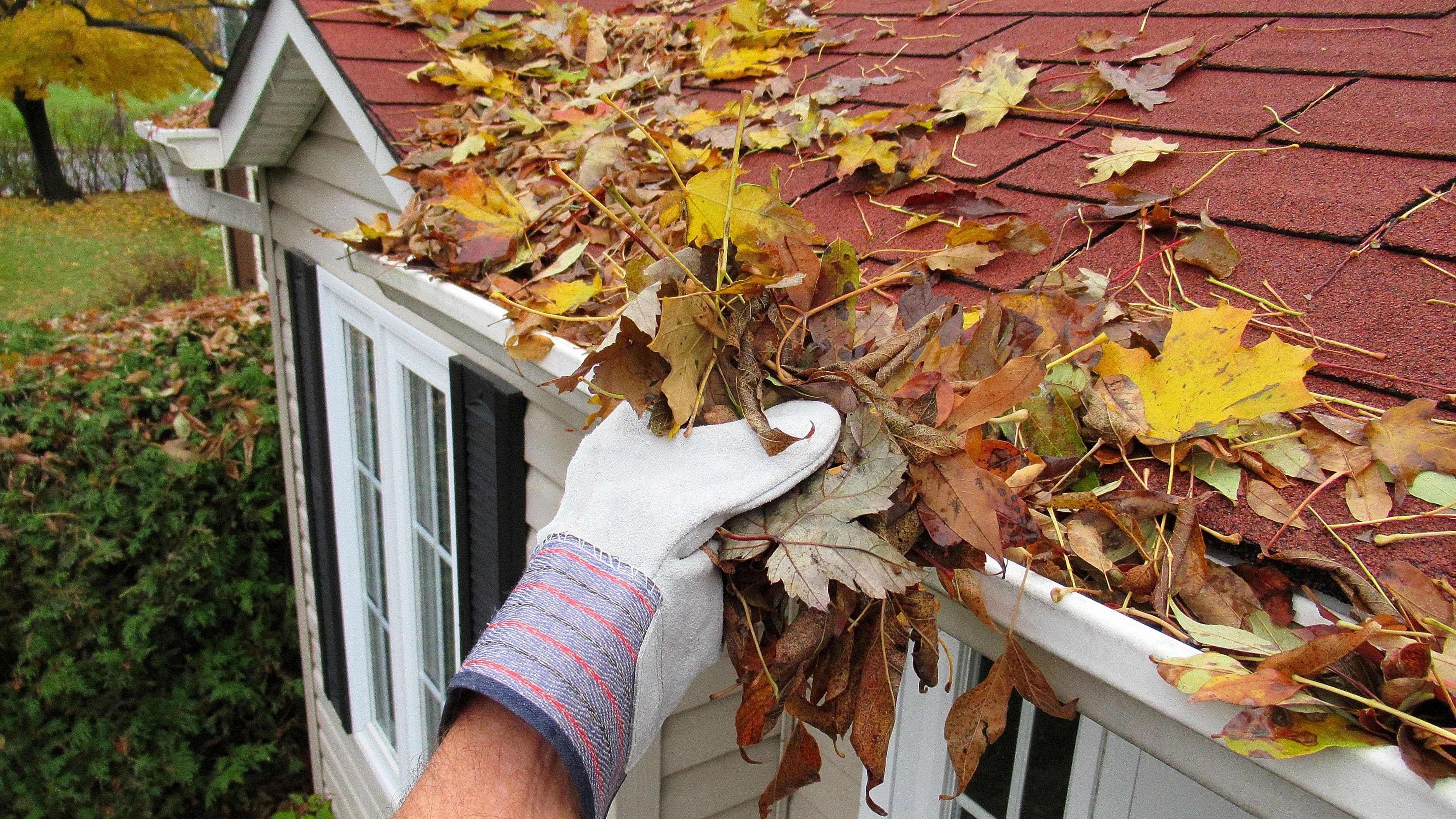
Ongoing costs are the other underestimated category. Property taxes, homeowner's insurance, HOA fees (where applicable), and maintenance typically run 1–3% of the home's value annually. On a $400,000 home, that's $4,000–$12,000 per year – real money that doesn't build equity and doesn't appear in simple appreciation calculations. When you run the true total cost of ownership including these expenses, the actual return on a home purchase looks considerably more modest than the headline appreciation number.
Opportunity cost is the concept that gets the least attention. Every dollar tied up in a down payment and home equity is a dollar not invested in something else. The S&P 500 has delivered average annual returns of roughly 10% nominally over long periods. If you put $80,000 in a down payment on a home and that money earns the historical housing appreciation rate instead of the historical stock market rate, the difference in outcomes over 20–30 years is substantial. This doesn't mean buying a home is wrong – it means the decision has a real financial opportunity cost that should be part of the analysis.
What the Current Market Actually Looks Like
The specific environment of 2024–2025 adds layers of complexity to this question that didn't exist a few years ago.
Mortgage rates in the 6.5–7.5% range fundamentally change the monthly payment math compared to the 3% rates of 2020–2021. A $400,000 home with 20% down at 3% carried a principal and interest payment of roughly $1,350/month. The same home at 7% costs about $2,130/month in principal and interest – a 58% increase in payment for the same asset. For buyers stretching to qualify, that difference represents years of financial strain for an asset whose near-term appreciation is uncertain.
Home prices haven't corrected meaningfully in most markets despite the rate increase, largely because inventory remains constrained. Existing homeowners locked into 2–3% mortgages have little incentive to sell, and new construction hasn't filled the gap. The result is high prices and high rates simultaneously – what analysts have called an "affordability double squeeze" with no clear near-term resolution.
In this environment, the buy vs. rent math in many major metros heavily favors renting from a pure monthly cash flow standpoint. The New York Times rent vs. buy calculator, the most widely used tool for this comparison, shows that at current prices and rates in cities like San Francisco, New York, Seattle, and Austin, you'd need to stay in a purchased home for 10–15+ years just to break even with renting and investing the difference. That's a meaningful hurdle for people whose careers, families, or life plans might require flexibility within that window.
When Buying Still Makes Strong Financial Sense
None of this means homeownership is a bad financial decision – it means it's a conditional one. There are circumstances where buying a home remains one of the best financial moves available.
Long time horizon is the single most important variable. The transaction costs, the rate environment, the near-term price uncertainty – all of these shrink in significance if you're confident you'll stay in the home for 8–10+ years. The longer you hold, the more the forced savings mechanism works in your favor, the more appreciation compounds, and the more the transaction costs get amortized across years of ownership.
Geographic and price point matter enormously. The affordability challenge is concentrated in high-cost metros. In secondary and tertiary markets – parts of the Midwest, South, and Mountain West where median home prices remain below $300,000 – the buy vs. rent math looks quite different. Homeownership in those markets can still be a straightforward financial win, particularly for buyers with stable incomes and established roots.
Fixed-rate stability has real value that pure investment return comparisons miss. Once you close on a fixed-rate mortgage, your principal and interest payment doesn't change for 30 years. Your rent, on the other hand, can increase annually. In markets where rents are rising consistently, locking in housing costs through a mortgage provides a form of financial stability that a spreadsheet doesn't fully capture.
Emotional and lifestyle value is a legitimate factor, even if it's not a financial one. Stability, the freedom to renovate, the ability to own pets, putting down roots in a community – these have real quality-of-life value for many people. If homeownership improves your life in ways that renting doesn't, that's worth something even when the pure investment math is closer than it used to be.
Practical Takeaways
If you're actively weighing this decision, here's what should anchor your thinking.
Run the rent vs. buy math for your specific situation – don't rely on general rules. Use the NYT calculator or a similar tool with your actual local rents, home prices, estimated appreciation, and planned time horizon. The output will be more informative than any blanket advice.
Be honest about your time horizon. If there's meaningful probability you'll need to move within five years for career, family, or lifestyle reasons, the transaction costs alone make buying a difficult financial case at current prices and rates.
Factor in total cost of ownership, not just the mortgage payment. Add property taxes, insurance, maintenance, and HOA fees to your monthly comparison against renting. The real monthly cost of ownership is almost always higher than the mortgage payment alone.
Don't treat your home as a retirement plan. Home equity can be a meaningful part of your net worth, but it's illiquid and concentrated in a single asset. Alongside homeownership, continuing to contribute to retirement accounts and building a diversified investment portfolio is how you avoid being "house rich, cash poor" at retirement.
Consider the rate environment in your decision timeline. If rates decline materially over the next few years, refinancing becomes an option – the saying "marry the house, date the rate" has merit if you're buying a home you'd be comfortable owning long-term. But don't buy a home that only makes financial sense at a lower rate you don't actually have.
FAQ
Has homeownership historically beaten the stock market? Over very long periods, no – not on a pure total-return basis once you account for all costs. Robert Shiller's research shows real housing appreciation of roughly 0.5–1% annually over the very long run, compared to real stock returns of around 7% annually for the S&P 500. However, leverage, forced savings, and the non-financial value of homeownership mean a direct comparison isn't the full picture. They're different types of assets serving different purposes.
Is renting just throwing money away? No – this is one of the most persistent financial myths. Rent buys you housing, flexibility, and freedom from maintenance costs and transaction exposure. Whether renting or buying is financially superior depends on your specific market, time horizon, and what you do with the money you're not tying up in a down payment and ownership costs.
What's a healthy down payment in the current market? 20% remains the benchmark that avoids private mortgage insurance (PMI), which adds 0.5–1.5% of the loan amount annually to your costs. If a 20% down payment would leave you with minimal savings or emergency fund, a smaller down payment with PMI may be more financially sound than depleting your cash reserves to hit 20%.
Should I wait for mortgage rates to drop before buying? Timing the market is as difficult in real estate as in stocks. If you're buying a home you plan to own for 10+ years in a market that makes sense for your finances, waiting for rates to drop means potentially waiting years while paying rent and missing potential appreciation. If you can comfortably afford the current payment and the home meets your long-term needs, the option to refinance if rates drop provides a reasonable safety valve.
How do I know if a home is fairly priced in my market? Look at the price-to-rent ratio: divide the home's purchase price by its annual rental equivalent. A ratio above 20 generally indicates a market where renting has financial advantages; below 15 tends to favor buying. This is a rough guide, not a rule, but it gives quick directional context on local market valuation.
📚 Sources
Robert Shiller – Online Data: U.S. Home Prices and Related Data: http://www.econ.yale.edu/~shiller/data.htm
The New York Times – Is It Better to Rent or Buy? (Interactive Calculator): https://www.nytimes.com/interactive/2014/upshot/buy-rent-calculator.html
National Association of Realtors – Housing Affordability Index: https://www.nar.realtor/research-and-statistics/housing-statistics/housing-affordability-index
Consumer Financial Protection Bureau – Understanding Loan Costs: https://www.consumerfinance.gov/owning-a-home/process/
Federal Reserve Bank of St. Louis – U.S. Home Price Index (FRED): https://fred.stlouisfed.org/series/CSUSHPINSA