

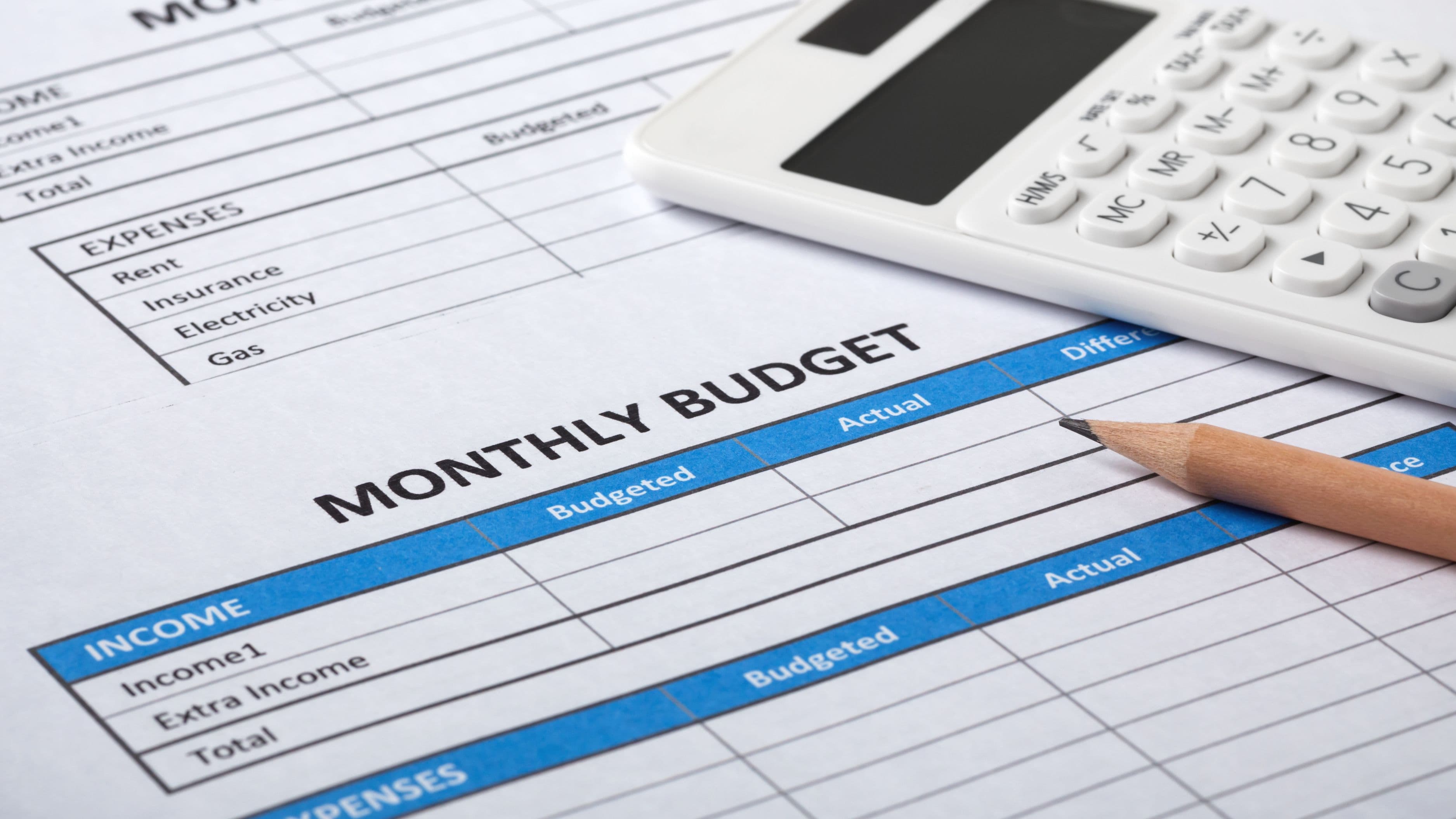
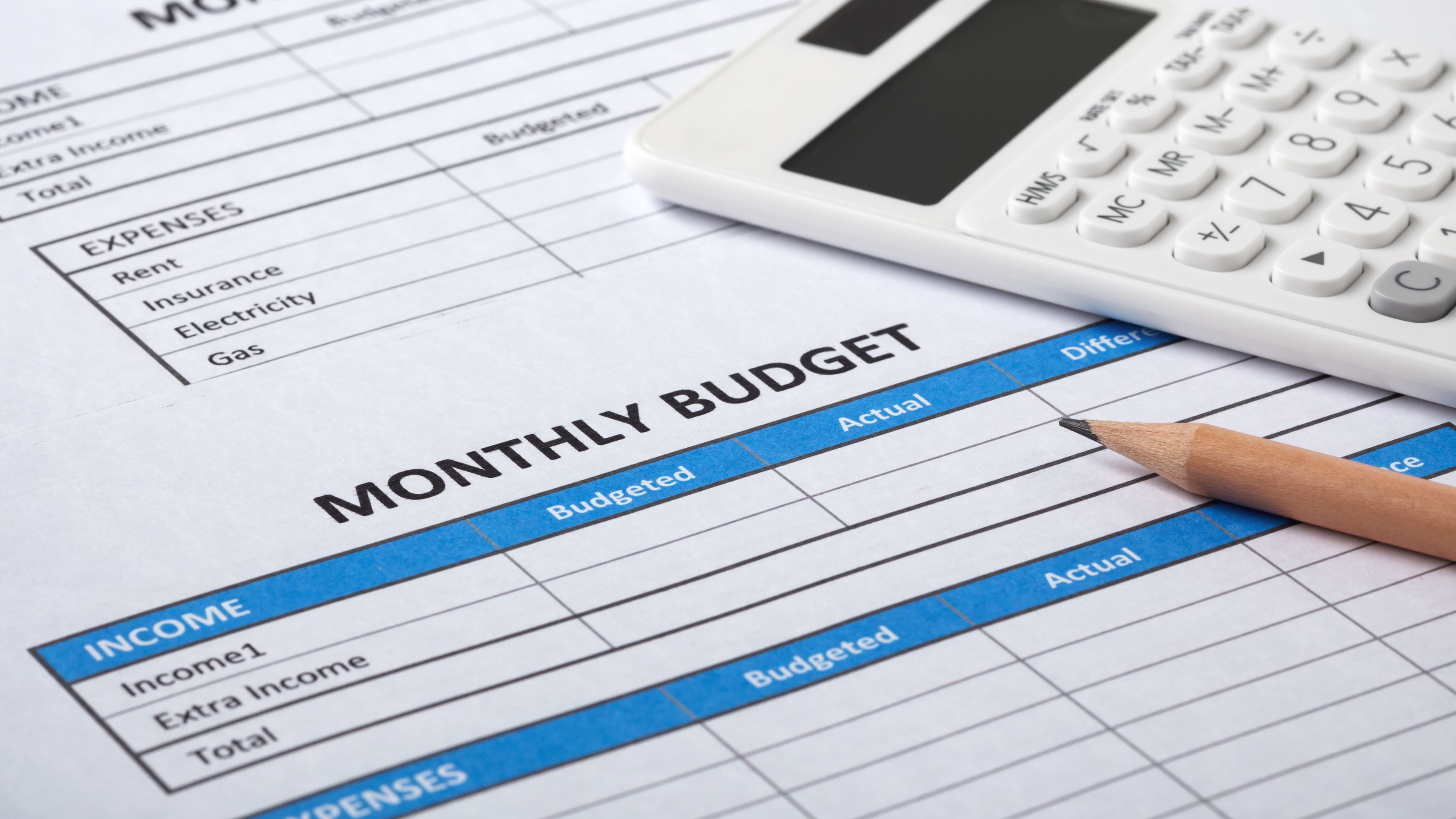
The kind of budget that sticks isn't the one with the most categories or the strictest limits. It's the one you'll actually look at, adjust when needed, and come back to month after month. This guide walks through how to build exactly that.
Step 1: Start With What You Actually Earn
The foundation of any working budget is your real take-home income – not your gross salary, and not what you wish you earned. Take-home pay is what lands in your bank account after taxes, health insurance, retirement contributions, and any other deductions have already been taken out. That's the number you have to work with.
If your income is irregular – freelance, hourly with variable hours, commission-based, or a mix of a salary and side income – use a conservative estimate based on your lowest recent months rather than your best ones. Overestimating income is one of the most common reasons budgets fail before they start. Build around what you can reliably count on, and treat anything extra as a bonus to direct intentionally when it arrives.
If you have multiple income sources, total them all. The budget covers everything coming in and everything going out, so you need the complete picture on both sides before you start assigning numbers.
Step 2: Track What You're Actually Spending – Before You Set Limits
Most budgeting advice jumps straight to setting spending limits. That's backwards. If you set limits before you know what you're currently spending, you're guessing – and you'll almost certainly guess wrong in categories where you routinely spend more than you think.
Before you set a single limit, spend two to four weeks tracking every transaction. Most banks and credit unions now offer spending breakdowns in their apps, which makes this faster than it used to be. You can also export recent statements and categorise them in a spreadsheet, or use a free app like Mint or YNAB to pull transactions automatically. The goal isn't to judge what you find – it's to see clearly.
Most people are genuinely surprised by how much goes to specific categories like dining, subscriptions, or convenience purchases they barely register making.
Once you have a realistic picture of your current spending, your budget is grounded in reality rather than aspiration. That difference is significant.
Step 3: Cover Your Fixed Expenses First
Fixed expenses are the non-negotiables: rent or mortgage, car payment, insurance premiums, loan minimums, phone bill, internet, and any other expenses that arrive at the same amount every month regardless of what you do. List them all with their exact amounts and add them up.
This number is your baseline. It's the floor beneath which your monthly spending cannot go regardless of how carefully you manage everything else. If your fixed expenses already consume most of your take-home pay, that's important information – it tells you that real financial progress requires either increasing income, reducing fixed costs (like refinancing, downsizing, or cancelling subscriptions), or both. A budget can't fix a structural cash flow problem on its own, but it makes the problem visible so you can address it directly.
Step 4: Assign Your Variable Spending Categories
Variable expenses are the ones you can influence month to month: groceries, dining out, fuel, clothing, entertainment, personal care, household supplies. These are where most budget-setting happens and where most budgets go wrong by setting limits that are either too tight or too vague.
A few principles that make category limits more realistic. Base your numbers on what you actually spend, not what you think you should spend – then adjust from there. Be specific enough that categories are useful, but not so granular that tracking becomes a daily chore. Groceries and dining out should be separate categories because they behave differently; "food" as one line item makes it too easy to lose track of which one is running over. Similarly, subscriptions deserve their own line because they're easy to forget and accumulate silently.
Give yourself a realistic entertainment or personal spending category. A budget that eliminates all discretionary spending is the financial equivalent of a crash diet – it might technically work for a few weeks, but it's unsustainable and tends to produce backlash spending when the pressure releases. Building in a reasonable amount for things you enjoy isn't a failure of discipline. It's what makes the system survivable long-term.
Step 5: Build in a Buffer for Irregular Expenses
This is the step most budgets skip, and it's why so many budgets feel like they're always breaking. Car repairs, medical co-pays, vet bills, annual subscriptions, home maintenance, gifts, and travel aren't surprises – they're predictable in the sense that you know they'll happen even if you don't know exactly when. When they arrive and there's no money set aside for them, they either blow up the budget for that month or go on a credit card.
The fix is a sinking fund: a small monthly allocation to a dedicated savings pot for irregular expenses. Estimate your annual spend on these categories, divide by 12, and set that aside each month. If you expect to spend $1,800 over the course of the year on car maintenance, insurance renewals, and unexpected medical costs, that's $150 a month. When the tyre needs replacing, the money is already there. It doesn't feel like a crisis.
Many people find it useful to hold sinking fund money in a separate savings account from their emergency fund, so it's clearly designated and easy to track.
Step 6: Pay Yourself First – Savings and Goals
Savings and financial goals shouldn't be what's left over after everything else is spent. They should be allocated at the top of the budget, right after fixed expenses, before variable spending gets touched. This is what "pay yourself first" means in practice.
Decide on a savings target as a percentage of your take-home income – 10% is a common starting point, though any consistent amount is better than none if you're starting from zero. Set up an automatic transfer to a savings or investment account on the day your salary arrives so the money moves before you have a chance to spend it. What you don't see, you don't spend.
If you have specific goals – paying off a debt, building an emergency fund, saving for a house deposit – give each goal its own line in the budget with a monthly allocation. Specific allocations move faster than vague intentions. "I'm saving for an emergency fund" as a thought is different from "$200 transferred automatically to a dedicated account on the 1st of each month."
Step 7: Choose a Format That Fits How You Actually Work
There's no single correct budgeting format. The right system is the one you'll use consistently, and that varies by person. Some people want every dollar assigned in detailed categories. Others prefer a simpler split – a version of the 50/30/20 rule that divides income into needs (50%), wants (30%), and savings/debt repayment (20%) – and feel better with that looser structure than with line-by-line micromanagement.
A spreadsheet works well if you're comfortable in one and like seeing the full picture. Apps like YNAB (You Need a Budget), Monarch Money, or Copilot connect to your accounts, categorise transactions automatically, and send alerts when you're approaching a category limit. A simple notebook works too if you prefer analogue and will actually write in it. The format matters less than whether you come back to it regularly. Most successful budgeters review their spending at least once a week – a 10-minute check is enough to catch problems before they compound.
Step 8: Review and Adjust Every Month
A budget is not a document you build once and execute perfectly. It's a monthly estimate that you compare against reality and adjust based on what you learn. The first few months will have categories that are consistently off – either too tight or too generous – and the right response is to adjust the numbers to reflect reality, not to feel bad about them.
Life changes, too. A pay rise, a new expense, a change in your goals – all of these need to flow through to your budget or the budget becomes outdated and irrelevant. Scheduling a brief monthly budget review at a consistent time – the last Sunday of the month, the first day after payday – makes it a habit rather than a chore you get around to eventually.
The goal isn't a perfect month. It's a system that keeps you broadly on track, surfaces problems early, and gives you information to make better decisions. Those outcomes are achievable with a realistic budget and consistent attention. They're not achievable with a rigid plan you abandon in week three.
What This Means for Your Money
Building a budget that works is ultimately about building a system that gives you control over where your money goes rather than wondering where it went. The impact is practical and measurable: you know how much you have to spend in any given category, you're less likely to be caught off guard by irregular expenses, and you're consistently moving money toward your goals rather than hoping there's something left at the end of the month.
Even a rough budget that you review regularly is more valuable than a perfect budget you abandon. Start with your real numbers, build in breathing room, automate what you can, and adjust month by month. That approach doesn't require financial expertise – just consistency.
FAQ
What's the easiest budgeting method for beginners? The 50/30/20 rule is the most accessible starting point: 50% of take-home income to needs, 30% to wants, and 20% to savings and debt repayment. It's simple enough to apply without detailed tracking and works well as a framework until you're ready to go more granular.
What should I do when I go over budget in a category? First, check whether the limit was realistic. If you've gone over the same category three months in a row, the number is wrong, not your behaviour – adjust it. If it was a genuine one-off, note it and move on. Don't try to compensate by slashing another category artificially; that usually creates a different problem.
Should I budget down to every dollar? Not necessarily. Zero-based budgeting – where every dollar is assigned a purpose – works very well for some people. Others find it exhausting. What matters is that you're intentional about the major categories: housing, savings, debt, and discretionary spending. Perfect tracking of small purchases adds friction that causes some people to abandon the system entirely.
Is a spreadsheet or an app better for budgeting? Whichever one you'll actually use. Apps have the advantage of pulling transactions automatically and sending alerts; spreadsheets give you more flexibility and no subscription cost. Try one for a month and see if it sticks. Switching tools later is easy.
How do I budget if my income varies month to month? Base your budget on your lowest expected monthly income. In months when you earn more, direct the surplus explicitly – additional savings, extra debt payments, or a discretionary pot – rather than letting it disappear into general spending. This approach keeps your baseline sustainable and turns variable income into a planning advantage rather than a source of uncertainty.
📚 Sources
Consumer Financial Protection Bureau – Making a Budget: https://www.consumerfinance.gov/consumer-tools/budgeting/
Investopedia – The 50/30/20 Budget Rule: https://www.investopedia.com/ask/answers/022916/what-502030-budget-rule.asp
NerdWallet – Best Budgeting Apps: https://www.nerdwallet.com/article/finance/best-budget-apps
CFPB – Building an Emergency Fund: https://www.consumerfinance.gov/consumer-tools/save-and-invest/
Fidelity – The Importance of Paying Yourself First: https://www.fidelity.com/viewpoints/personal-finance/pay-yourself-first
U.S. Bank – How Sinking Funds Work: https://www.usbank.com/financialiq/manage-your-household/personal-finance/what-is-a-sinking-fund.html