
Open banking matters for your money because it changes what financial apps can do for you, what data they can access, and how that access is governed. Understanding the basics helps you make smarter decisions about which apps to trust and how much access to grant them.
What Open Banking Actually Is
Open banking is a framework that allows third-party financial apps and services to access your bank account data – with your explicit permission – through secure, standardized connections called APIs (Application Programming Interfaces). Instead of giving an app your actual banking credentials, you authorize it directly through your bank's official system, which then shares only the specific data the app needs.
Before open banking, many finance apps used a practice called "screen scraping" – you'd hand over your username and password, and the app would log into your bank account on your behalf, pulling data as if it were you. It worked, but it was a security nightmare. Your credentials were stored by a third party, and if that company was breached, your login details were exposed. Open banking replaces that with a cleaner, safer architecture.
In the UK and Europe, open banking is mandated by regulation. UK banks above a certain size are legally required to offer open banking connections under the Open Banking Standard, while the EU's PSD2 directive created similar requirements across Europe. In the United States, the framework is still developing – the Consumer Financial Protection Bureau (CFPB) finalized a rule in late 2024 under Section 1033 of the Dodd-Frank Act that requires financial institutions to give consumers access to their own financial data and to share it with authorized third parties upon request. This puts the U.S. on a more formal open banking path than it's been on before.
Why It's a Big Deal for AI Finance Apps
The connection between open banking and AI finance apps is direct: better data access produces better, more personalized financial tools.
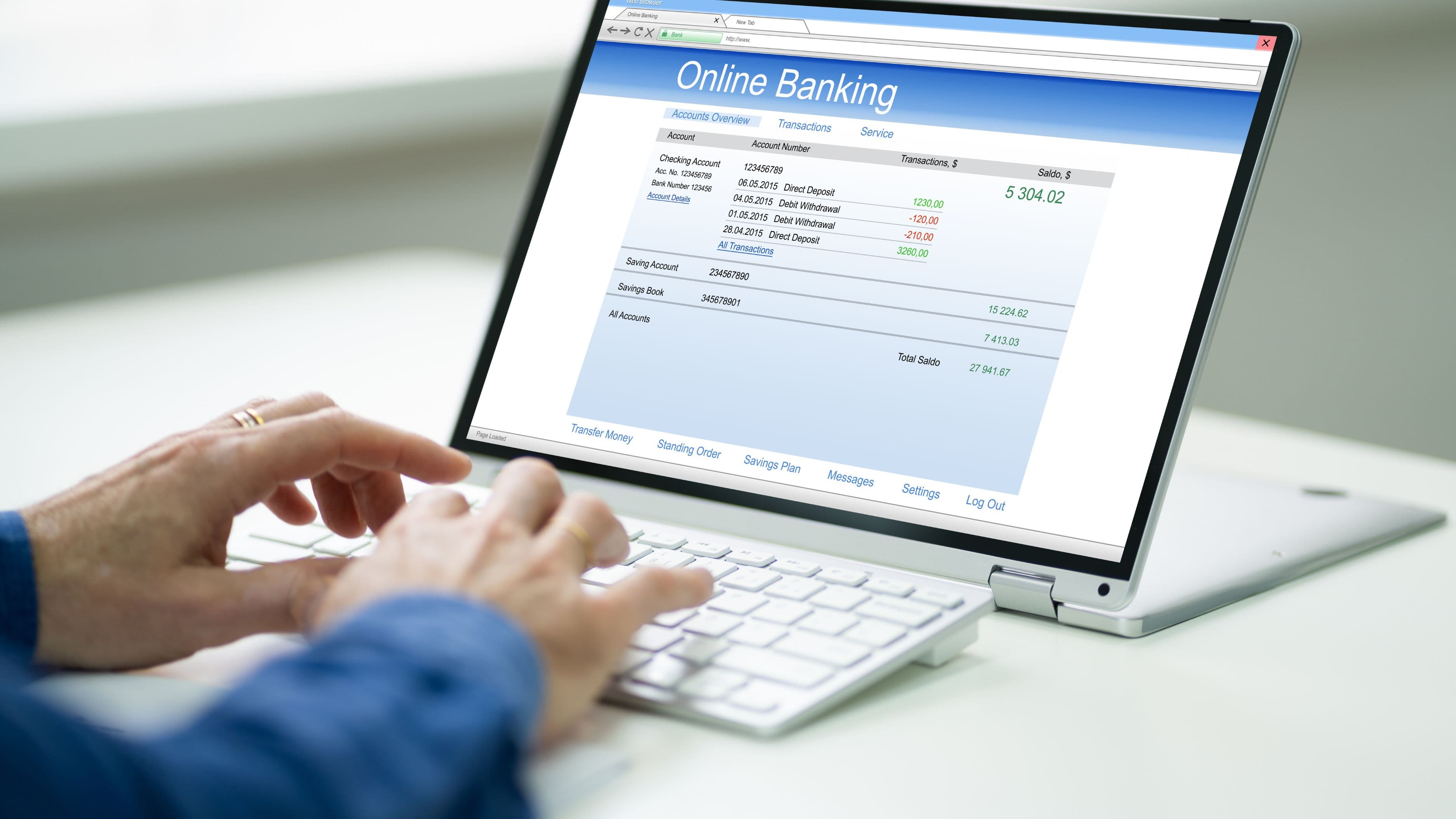
Most AI-powered personal finance apps – budgeting tools, savings optimizers, investment aggregators, debt payoff planners – need rich, real-time transaction data to do anything meaningful. Without that data, they're showing you a static snapshot, or making recommendations based on what you manually tell them. With open banking connections, these apps can pull live transaction histories, current balances across multiple accounts, recurring payment patterns, and income timing – all in one place, automatically.
That complete financial picture is what allows an app to tell you something genuinely useful: that your spending in a particular category is trending 20% above your average this month, that you have enough in checking to move $200 to savings before an upcoming bill hits, or that a subscription you haven't used in four months is still being charged. None of those insights are possible without access to real transaction data, and open banking provides that access in a governed, secure way.
For more advanced AI finance tools, the data richness of open banking enables actual predictive analysis. When an app can see months of your spending history, income patterns, and financial behavior, it can model cash flow projections, identify your personal financial stress points, and suggest concrete actions tailored to your actual numbers rather than generic advice. That's a fundamentally different product than a budgeting spreadsheet or a calculator.
What This Means for Your Money
Open banking expanding in the U.S. means the finance apps you already use – or will use – are about to get noticeably better at personalization. Here's what that looks like in practice.
Comprehensive account visibility is the baseline benefit. Instead of tracking one bank account or manually entering transactions from multiple institutions, open banking-connected apps can show you a complete financial picture across your checking, savings, credit cards, and investment accounts simultaneously. That consolidated view makes it much easier to understand your actual net position at any point in time.
Smarter budgeting and cash flow alerts become possible when an app has live data. Rather than discovering at the end of the month that you overspent on dining, you can get a mid-month nudge when you're trending over. Automated savings tools can move money into savings accounts at the right moment in your cash flow cycle – after a paycheck clears, before a large bill hits – rather than on a fixed schedule that may or may not align with how your money actually moves.
Credit and lending decisions could also become faster and fairer. Traditional loan applications rely heavily on credit scores, which are a backward-looking summary of your credit behavior. Open banking gives lenders the option to assess your real-time cash flow, income consistency, and payment behavior directly. For people with thin credit files – recent graduates, immigrants, or anyone who hasn't relied on credit cards – this could mean better access to credit based on actual financial behavior rather than a limited credit history.
The Privacy and Security Questions Worth Asking
Open banking access is permission-based, which means you're in control of what you share and with whom. But that control is only meaningful if you exercise it thoughtfully.
When a financial app asks to connect to your bank account, it should be clear about exactly what data it will access and for how long. Read those permissions before you authorize. An app that needs read-only access to transaction history to help you budget doesn't need the ability to initiate payments. If the permission request is broader than what the feature requires, that's worth questioning.
Check whether the app uses direct API connections with your bank rather than older screen-scraping methods. Apps built on open banking APIs through aggregators like Plaid, MX, or Finicity are connecting through your bank's official system. That's meaningfully more secure than sharing your actual login credentials. If an app is still asking for your username and password directly, that should give you pause.
Revoke access when you stop using an app. Most banks now offer a connected apps dashboard where you can see which third parties have access to your account data and revoke that access with a few clicks. This is good financial hygiene – there's no reason an app you stopped using three months ago should still have a live connection to your account.
The Limitations and Risks
Open banking is a better system than what preceded it, but it's not without trade-offs.
Data aggregation creates a new kind of concentration risk. The companies that sit between your bank and the apps you use – aggregators like Plaid, which connects to thousands of banks and serves hundreds of apps – hold enormous amounts of financial data. A breach at an aggregator level is a different magnitude of exposure than a breach at a single app. These companies do invest heavily in security, but the concentration of sensitive financial data in a few intermediaries is worth being aware of.
Not all banks support open banking connections equally. Smaller credit unions and community banks may have limited or no API connections to popular finance apps, which can fragment the picture you're able to build. This is improving over time, particularly as the CFPB's rulemaking takes effect, but it remains an inconsistency worth checking if you're evaluating an app.
The quality of AI insights is still bounded by the quality of the underlying data. Open banking provides transaction history and balance information, but categorization isn't always accurate, and apps interpret data differently. A charge labeled generically may get miscategorized in your budget. Keep a healthy skepticism toward any individual AI-generated recommendation and verify it against your own understanding of your finances.
Practical Takeaways
Open banking is working in the background of many apps you may already use, but understanding it helps you use those tools more deliberately. A few things worth acting on:
Check whether your bank offers a connected apps dashboard and review which apps currently have access to your account. Revoke anything you're no longer actively using. When you connect a new finance app, look at the specific permissions it's requesting and ask whether they match what the app actually does. For any app that still uses credential-based access rather than a direct bank API connection, weigh whether the convenience is worth the security trade-off. And as U.S. open banking rules continue to develop under the CFPB's 1033 framework, expect your rights around data portability to expand – you'll increasingly have the formal ability to move your financial data to competing services, which is good for competition and good for your options.
The bottom line is that open banking makes AI finance tools more capable by giving them better raw material to work with. Whether that translates into genuine value for your finances depends on which apps you choose, what you share with them, and how carefully you stay in control of that access.
FAQ
Is open banking safe to use? Open banking through official API connections is significantly safer than the older screen-scraping approach because you never share your actual banking credentials with third-party apps. Your bank handles the authentication and shares only the data you authorize. Like any financial tool, the safety depends on the reputation of the app you're connecting to and the security practices of the aggregator it uses. Stick to established apps with transparent security practices and clear privacy policies.
Does every bank in the U.S. support open banking? Not fully, yet. Large national banks are generally well-connected through aggregators like Plaid and MX. Smaller regional banks and credit unions vary widely. The CFPB's 2024 rulemaking under Dodd-Frank Section 1033 is designed to require broader participation over time, but implementation is being phased in. If a specific app can't connect to your bank, that's likely a coverage gap rather than a problem with the app itself.
What's the difference between open banking and Plaid? Open banking is the overall framework and regulatory concept. Plaid is a company – a data aggregator – that facilitates open banking connections in practice. Plaid acts as the middleman between your bank and the apps you authorize, providing standardized API connections so that individual apps don't have to build relationships with thousands of banks independently. Other aggregators like MX and Finicity serve the same function.
Can I revoke an app's access to my bank data? Yes, and you should do so for any app you stop actively using. Most major banks now have a "connected apps" or "linked accounts" section in their online banking or mobile app where you can see and revoke third-party access. You can also revoke access directly within the app itself, which should terminate the connection on both ends.
How does open banking affect my credit score? Accessing your own account data through open banking doesn't affect your credit score – it's not a credit inquiry. However, if you use open banking data to apply for a loan or credit product through a lender that uses cash flow underwriting, that application may involve a credit check. The open banking data itself is supplementary information, not a scoring event.
📚 Sources
Consumer Financial Protection Bureau – Personal Financial Data Rights Final Rule (Section 1033): https://www.consumerfinance.gov/rules-policy/final-rules/personal-financial-data-rights/
Open Banking Implementation Entity (UK) – What Is Open Banking?: https://www.openbanking.org.uk/consumers/what-is-open-banking/
Plaid – How Plaid Works: https://plaid.com/how-it-works/
European Banking Authority – PSD2 Overview: https://www.eba.europa.eu/regulation-and-policy/payment-services-and-electronic-money/regulatory-technical-standards-on-strong-customer-authentication-and-secure-communication-under-psd2
Federal Reserve – Consumer Finance and Open Banking Research: https://www.federalreserve.gov/econres/feds/files/2023060pap.pdf