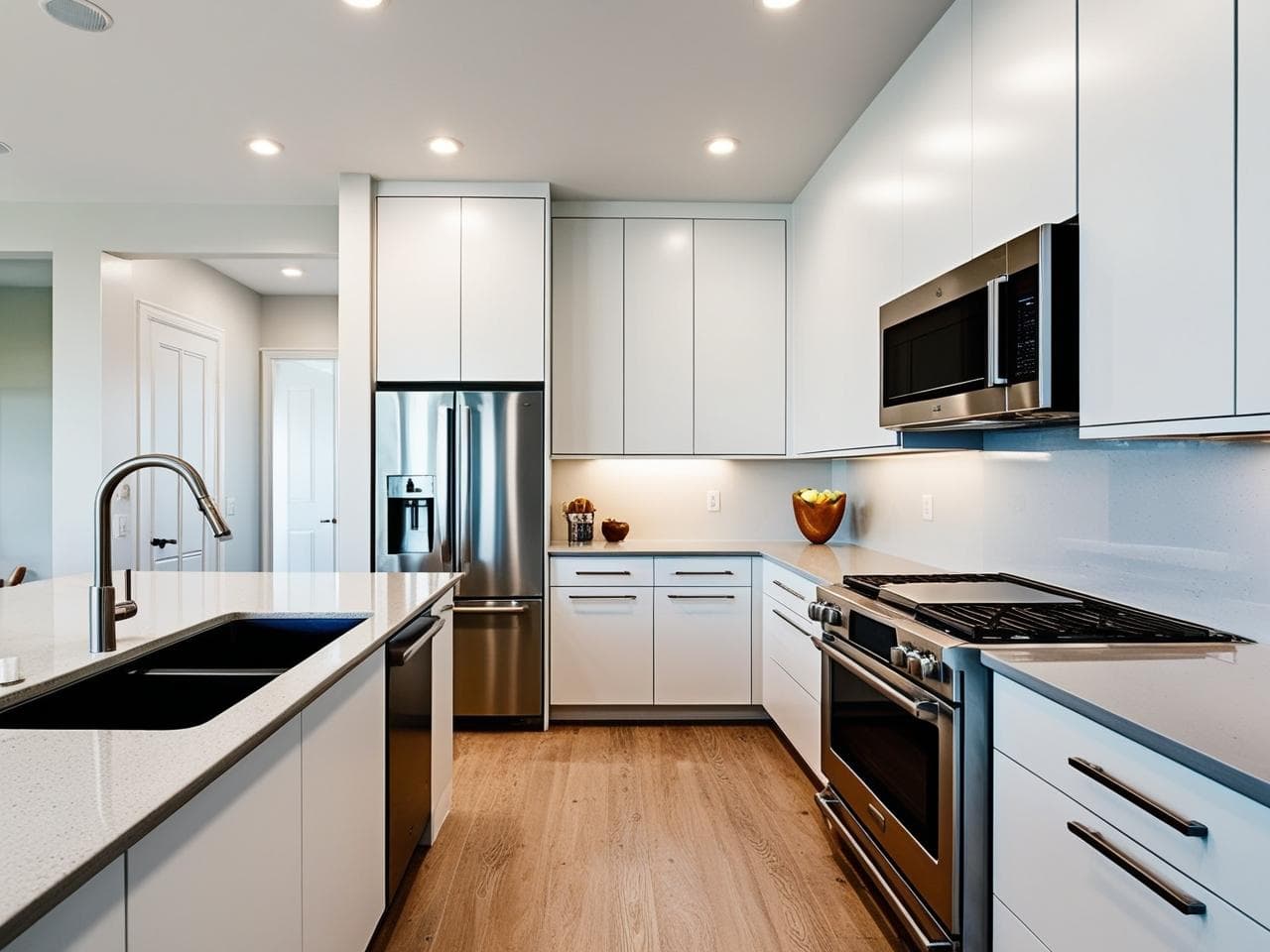



The house with the right school district is too small. The house with the right square footage is in the wrong neighborhood. And nearly everything in either category is priced at a level that would require giving up a mortgage rate secured in better times. The result, for millions of households, has been an almost counterintuitive conclusion: the best move is no move at all. Instead, they are transforming the homes they already own.
The U.S. home improvement market crossed $600 billion in annual spending in 2024, according to Harvard's Joint Center for Housing Studies. That number reflects not merely a cyclical uptick in kitchen remodels but a structural shift in how Americans think about housing as an asset and a living environment. The renovation economy is no longer a sideshow to the housing market. In many respects, it has become the housing market.
THE LOCK-IN EFFECT AND WHAT IT HAS UNLEASHED
Roughly 60 percent of outstanding U.S. mortgages carry interest rates below four percent, locked in during the historically low-rate environment of 2020 to 2022. With the 30-year fixed rate spending most of 2024 and 2025 above six and a half percent, selling a home and purchasing a comparable one would, for most of these homeowners, represent an immediate and substantial increase in monthly housing costs — sometimes exceeding $1,000 per month on a similarly priced property.
The rational response to this calculus has been to invest in the existing property rather than trade it. The Joint Center for Housing Studies estimates that the average renovation project budget has increased by roughly 35 percent since 2020 in real terms, driven partly by materials inflation, partly by higher contractor costs, and partly by the greater scope of projects that homeowners are now undertaking.
THE PROJECTS THAT PAY AND THE PROJECTS THAT FEEL GOOD
Remodeling Magazine's annual Cost vs. Value report consistently identifies a handful of categories — garage door replacements, manufactured stone veneer, minor kitchen remodels, and deck additions — as delivering returns above 80 cents on the dollar at resale. Major kitchen renovations, master suite additions, and backyard landscaping projects frequently return less than 50 cents on the dollar at sale, despite generating significant emotional satisfaction for the current occupants.
The financially sophisticated approach distinguishes between projects undertaken for current enjoyment and projects intended to add resale value. The error most commonly made is spending at investment-grade levels on lifestyle-grade projects without consciously accepting the financial tradeoff involved.
SUSTAINABILITY, INCENTIVES, AND THE ENERGY RENOVATION WAVE
The Inflation Reduction Act introduced or extended tax credits for heat pump installations, insulation upgrades, electrical panel replacements, and EV charger installations that have materially reduced the net cost of projects that were previously marginal in their financial justification. A homeowner replacing an aging natural gas furnace with a high-efficiency heat pump system can now access a federal tax credit of up to $2,000, plus potential state rebates that in some markets bring the effective subsidy above $5,000.
THE CONTRACTOR MARKET: MANAGING THE MOST IMPORTANT RELATIONSHIP
For any renovation project above modest scope, the single most consequential decision a homeowner makes is the choice of contractor. The renovation contractor market is structurally unusual: entry barriers are relatively low in most states, licensing requirements vary enormously by jurisdiction, and reputation signals are imperfect and easily gamed on digital platforms.
The counterintuitive discipline of slowing down the selection process and waiting for a preferred contractor's availability is one of the most reliably valuable decisions in renovation management. Written contracts, detailed specifications, phased payment structures tied to project milestones, and lien waivers from subcontractors are not bureaucratic formalities — they are the structural protections that define the difference between a successful project and a costly dispute.
THE LONGER VIEW: WHAT YOU ARE REALLY BUILDING
Renovation projects have a well-documented tendency to expand in scope and cost once walls are opened. Budgeting a 20 percent contingency over initial estimates is not pessimism — it is experience distilled. But for homeowners who approach the process with clear objectives, realistic expectations, and professional guidance, the renovation economy offers genuine opportunity: the chance to build exactly what you need, where you already belong.
📚SOURCES:
Harvard Joint Center for Housing Studies — Improving America's Housing 2025, 2025
Remodeling Magazine — Cost vs. Value Report, 2025
U.S. Department of Energy — Inflation Reduction Act Home Energy Rebates Overview, 2024