


This guide walks through the financial factors that should actually drive this decision, so you're comparing real numbers instead of just going with whichever option feels less overwhelming in the moment.
Start With What's Actually Driving the Decision
Before running any numbers, get specific about why this decision is even on the table. Are you outgrowing the space with a growing family, frustrated by an outdated kitchen, dealing with a location that no longer fits your commute or lifestyle, or facing a major repair like a roof or foundation issue that's forcing a decision either way? Each of these scenarios points toward a different answer, and being honest about the real driver keeps the rest of this process grounded in your actual situation rather than a generic renovate-versus-sell debate.
A home that mostly works for you except for one outdated room is a very different financial calculation than a home that no longer fits your life at all, regardless of what updates you make to it. Separating "I don't like this house anymore" from "this house doesn't work for my life anymore" is worth sitting with honestly before moving forward.
Compare the Real Cost of Renovating
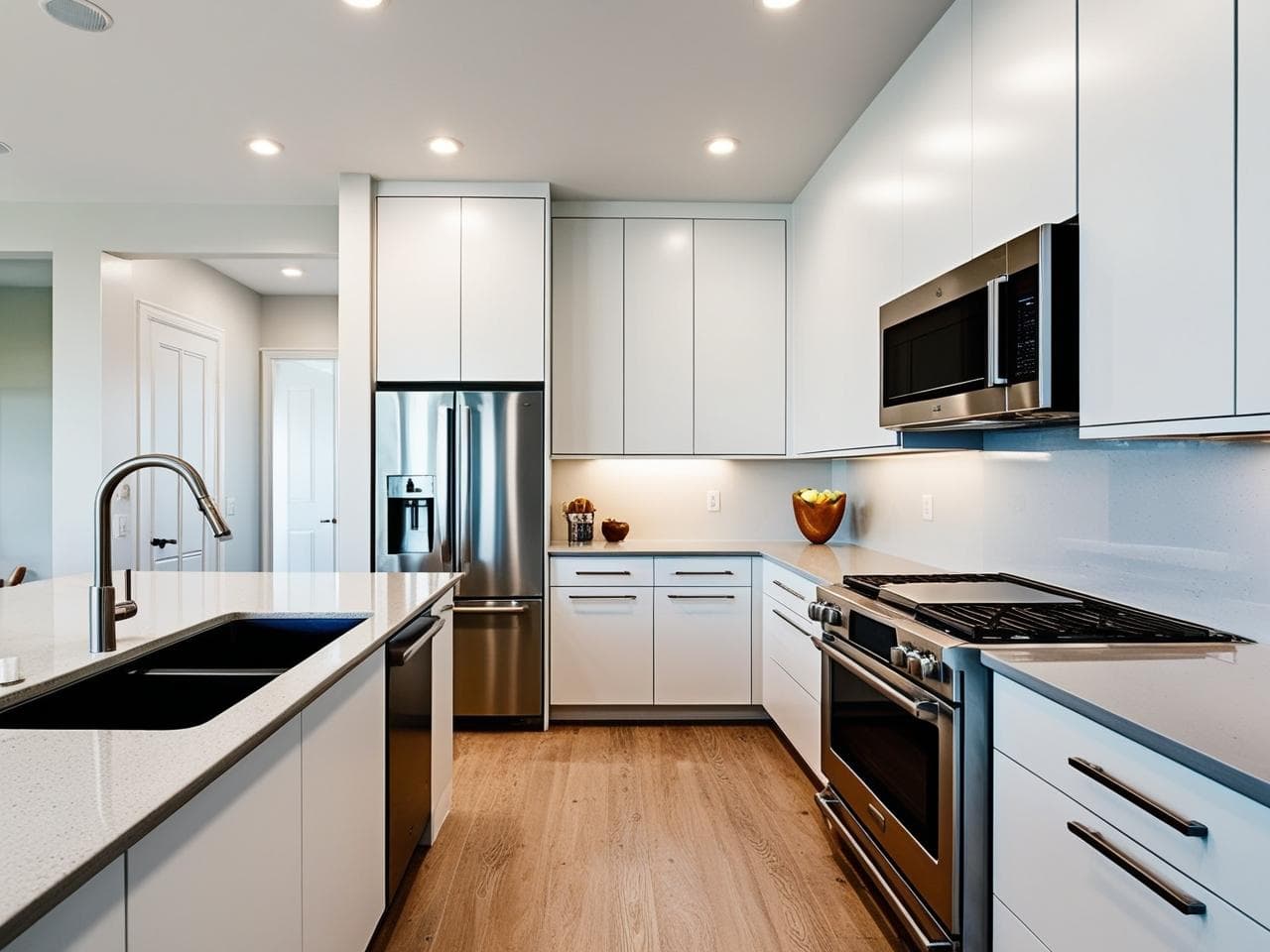
Get an actual, written estimate for the renovation you're considering rather than relying on a rough guess or a number you saw online for a "typical" project, since costs vary significantly by region, contractor, and the specific scope of work involved. A kitchen remodel, for instance, can range from a modest refresh in the $15,000 to $30,000 range up to a full gut renovation exceeding $75,000, depending heavily on materials, layout changes, and local labor costs.
Beyond the sticker price, factor in the realistic timeline and disruption involved, since a major renovation can mean weeks or months of reduced functionality in your home, and in some cases, temporary housing costs if the project makes the space unlivable. It's also worth budgeting a contingency of 10 to 20 percent above the initial estimate, since unexpected issues, especially in older homes, are common enough that most experienced contractors build this expectation into their own planning.
Understand Which Renovations Actually Add Resale Value
Not every renovation returns its cost if you eventually sell, and this matters even if selling isn't your immediate plan, since it's worth knowing how a project affects your home's overall value either way. Kitchen and bathroom updates, along with improved curb appeal and energy efficiency upgrades, tend to recoup a meaningfully higher percentage of their cost at resale compared to highly personalized projects like a home theater or an elaborate custom feature that may not appeal to the average future buyer.
Remodeling industry cost-value reports, published annually and widely cited by real estate professionals, consistently show that mid-range, functional updates tend to outperform high-end luxury renovations in terms of resale value recovered. If there's any chance you'll sell within the next five to seven years, this data is worth reviewing specifically for the renovation categories you're considering, since it can meaningfully shift which projects make sense financially.
Compare the Real Cost of Selling and Moving
Selling a home comes with costs that are easy to underestimate if you haven't gone through the process recently. Real estate agent commissions typically run 5 to 6 percent of the sale price, and closing costs, repairs requested during buyer inspections, and staging expenses can add several more percentage points on top of that. On a $400,000 home, this can realistically mean $25,000 to $35,000 in combined selling costs before accounting for the cost of your next home.
Then there's the cost side of buying again: a new mortgage at current interest rates, which may be significantly different from the rate on your existing loan, along with moving costs, potential temporary housing if timelines don't align perfectly, and the general disruption of relocating your entire life. If your current mortgage carries a notably lower interest rate than what's currently available, this is a factor that deserves serious weight, since moving to a new home often means resetting your mortgage rate to whatever the market offers at the time, which could meaningfully increase your monthly payment even on a similarly priced home.
Run the Numbers Side by Side
Once you have real estimates for both paths, the comparison becomes much clearer than it feels at the outset. Add up your total renovation cost, including a reasonable contingency, and compare it against your total cost to sell and buy again, factoring in commission, closing costs, moving expenses, and any change in your mortgage rate and payment. In many cases, particularly for homeowners with a low existing mortgage rate, staying and renovating turns out to be the financially stronger choice even when the renovation itself feels expensive in isolation.
That said, this isn't universally true. If your home has structural or location issues that no renovation can fully solve, like a lot size that can't accommodate the space you need or a location that no longer serves your life, selling may be the better financial decision even at a higher upfront cost, since it solves the underlying problem rather than working around it.
Factor In How Long You Plan to Stay
The length of time you expect to remain in the home changes this calculation significantly. A renovation's cost gets "amortized" over however long you stay to enjoy it, meaning a $40,000 renovation feels very different if you're planning to stay for 15 more years compared to potentially selling in two or three. Selling costs, on the other hand, are a one-time hit that doesn't repeat regardless of how long you stay in your next home afterward.
If you're genuinely uncertain how long you'll stay, it's worth leaning toward renovation choices that also perform well for resale value, giving you flexibility either way rather than betting entirely on one specific timeline.
What This Means for Your Money
This decision ultimately comes down to comparing two sets of real numbers rather than a gut feeling about which option sounds less stressful. Renovating tends to make more financial sense when your current mortgage rate is meaningfully better than current market rates, when the issues with your home are fixable rather than structural, and when you plan to stay long enough to benefit from the investment.
Selling tends to make more sense when your space or location fundamentally doesn't fit your needs anymore, or when the renovation required to fix that would cost more than the premium you'd pay to simply buy a home that already has what you need.
Key Takeaways
Getting a written renovation estimate and a real estimate of your total selling and buying costs, side by side, replaces guesswork with an actual financial comparison specific to your situation. Your current mortgage rate compared to today's rates is one of the most overlooked but financially significant factors in this decision, particularly for anyone who locked in a lower rate in past years. Renovations aimed at kitchens, bathrooms, and energy efficiency tend to hold their value better than highly personalized projects, which matters even if you're not planning to sell soon. How long you plan to stay in the home meaningfully changes which option makes more financial sense, so it's worth being honest with yourself about your actual timeline rather than assuming a permanent stay by default.
FAQ
Is it always cheaper to renovate than to sell and buy again? Not always. It depends heavily on your current mortgage rate compared to today's rates, the scope of renovation needed, and whether your home's core issues, like size or location, are actually fixable through renovation at all.
How do I know if a renovation will add real value to my home? Reviewing annual cost-value reports from reputable remodeling and real estate industry sources can show which project types typically recoup the highest percentage of their cost, which is useful context even if you're not planning to sell soon.
Should I talk to a financial advisor or real estate professional before deciding? For a decision this financially significant, getting input from a real estate professional on local market conditions and a mortgage lender on your refinancing or new-purchase options can provide context specific to your situation that general guidance can't fully replace.
📚 Sources
National Association of Realtors, "Remodeling Impact Report" – https://www.nar.realtor/research-and-statistics/research-reports/remodeling-impact
Consumer Financial Protection Bureau, "Mortgage Basics" – https://www.consumerfinance.gov/owning-a-home/mortgage-basics/
Freddie Mac, "Primary Mortgage Market Survey" – https://www.freddiemac.com/pmms