
Here's exactly how to do it, step by step.
What a Roth IRA Actually Is
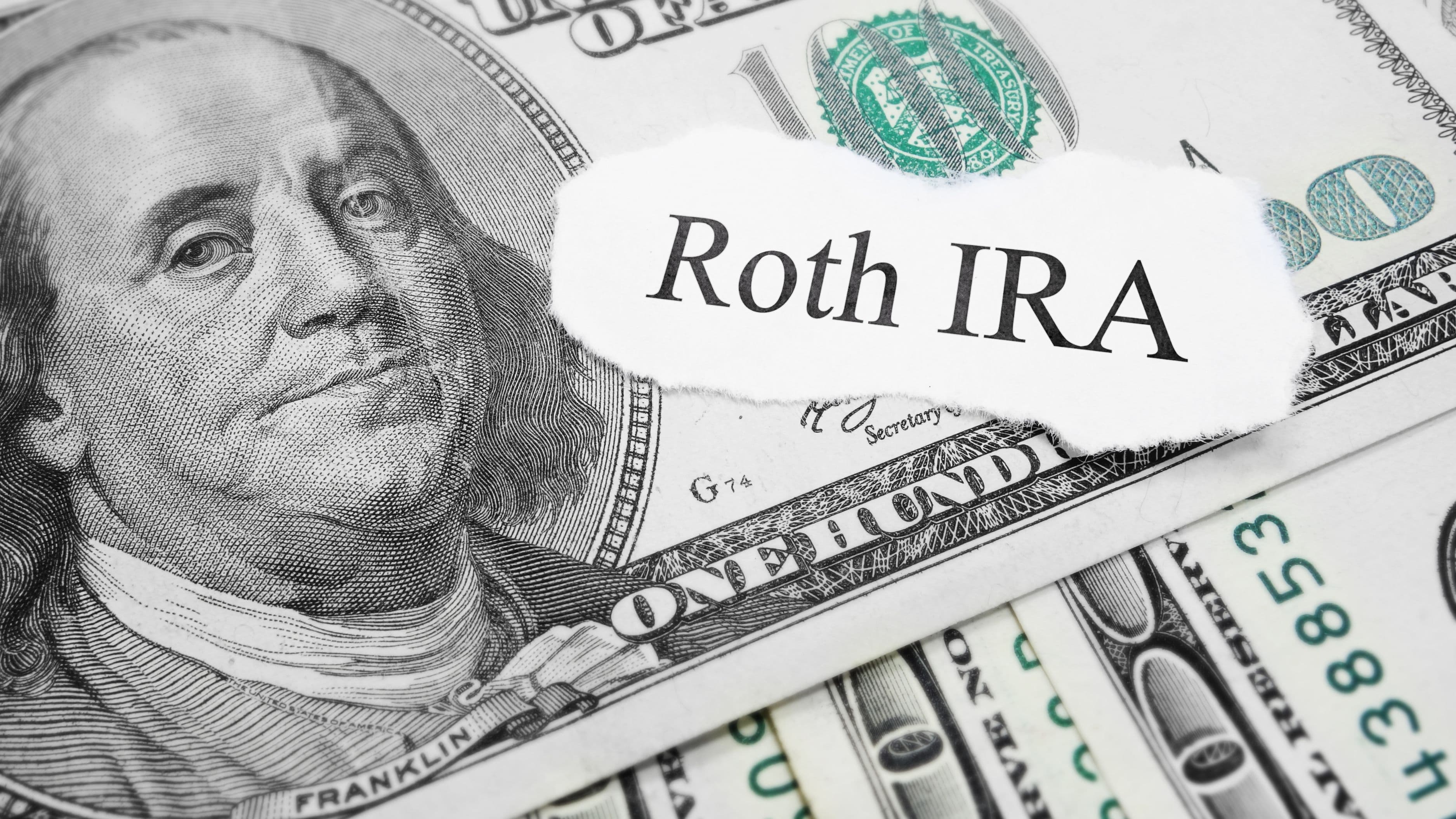
A Roth IRA is a retirement savings account that lets your money grow tax-free. You contribute money you've already paid taxes on — your after-tax income — and in return, you pay no taxes on the growth or on withdrawals in retirement. That means if you put $6,000 in today and it grows to $40,000 over 30 years, you owe nothing on that $34,000 in gains when you take it out.
Compare that to a traditional IRA or a 401(k), where you get a tax break upfront but pay income taxes on withdrawals later. The Roth flips the deal: pay taxes now, never again. For most people in their 20s, 30s, and 40s who expect to be in a similar or higher tax bracket in retirement, that trade tends to work in their favor over time.
There's one other thing that makes the Roth uniquely flexible: you can withdraw your contributions (not earnings, just what you put in) at any time, for any reason, without taxes or penalties. It's not designed for that — the whole point is to let it grow — but it means the account doesn't lock your money away as completely as other retirement accounts do.
Step 1: Check That You're Eligible
Before you open an account, confirm you meet the eligibility requirements. The IRS sets income limits on Roth IRA contributions, and if you earn above those limits, you either can't contribute directly or can only contribute a reduced amount.
For 2025, the ability to contribute the full amount phases out starting at $146,000 in modified adjusted gross income (MAGI) for single filers and $230,000 for married filing jointly. If your income is above the phase-out range — $161,000 for single, $240,000 for joint — you can't contribute to a Roth IRA directly. (Higher earners have a workaround called the backdoor Roth, but that's a more advanced topic.)
There's also a requirement that you have earned income — wages, salary, freelance income, or self-employment income. You can't contribute more than you earned in a given year. If you earned $3,500 this year, your maximum contribution is $3,500, not the annual limit.
Step 2: Know the Contribution Limits
For 2025, the contribution limit is $7,000 per year if you're under 50, or $8,000 if you're 50 or older (the extra $1,000 is a "catch-up contribution"). You don't have to contribute the maximum — any amount helps, and consistency over time matters far more than the size of individual contributions.
The contribution deadline is the tax filing deadline for that year, typically April 15 of the following year. So you can open a Roth IRA and make 2025 contributions anytime between January 1, 2025 and April 15, 2026. You're not rushed.
Step 3: Choose Where to Open Your Account
You open a Roth IRA through a brokerage — not a bank, though some banks offer them too. The brokerage is essentially the platform that holds your account and lets you invest. For beginners, the most important factors are: no account minimums, no trading fees, and a clean interface that doesn't make investing unnecessarily complicated.
A few strong options for first-time investors:
Fidelity has no account minimum, no trading fees on stocks and ETFs, and a well-regarded set of beginner-friendly tools and educational resources. It's a popular first choice and consistently ranked among the best for individual investors.
Charles Schwab is similar — no minimums, no trading fees, and a broad investment selection. Their customer service is highly regarded if you ever need help.
Vanguard is the original low-cost brokerage and the place most associated with index fund investing. It's slightly less polished interface-wise than Fidelity or Schwab, but extremely well-suited for the simple buy-and-hold strategy most long-term investors use.
Betterment and Wealthfront are robo-advisors — they invest for you automatically based on your goals and risk tolerance. This is worth considering if you want to set it up and not think about it. They charge a small annual fee (typically 0.25% of assets) in exchange for automatic management.
Opening the account takes about 15–20 minutes. You'll need your Social Security number, a government ID, and your bank account information to fund the account.
Step 4: Fund the Account
Once your account is open, you need to transfer money into it. Most brokerages let you link your checking or savings account and transfer funds electronically — it typically takes 1–3 business days to clear.
You don't have to contribute the full $7,000 at once. You can set up monthly automatic contributions if that's easier — $583/month gets you to the annual limit over 12 months, but even $100 or $200 a month makes a meaningful difference when invested consistently over time. The automatic contribution setup is usually found in your brokerage's account settings and takes a few minutes to configure.
One thing new investors sometimes miss: depositing money into a Roth IRA is not the same as investing it. Until you direct those funds into an investment, they sit as uninvested cash and earn nothing significant. This is one of the most common beginner mistakes — depositing and then leaving the money idle for months.
Step 5: Choose What to Invest In
This is where most beginners freeze up, but it doesn't need to be complicated. For the vast majority of people starting a Roth IRA with a long time horizon, a simple index fund or target-date fund is not just acceptable — it's the strategy that most professional investors would recommend.
Index funds track a broad market index like the S&P 500, which represents the 500 largest US companies. When you invest in an S&P 500 index fund, you own a tiny slice of all 500 companies at once. You get broad diversification automatically, without having to pick individual stocks. The fees are very low — often 0.03% to 0.10% per year — and decades of data show that most actively managed funds underperform a basic index fund over the long run.
Common starting points: Fidelity ZERO Total Market Index Fund (FZROX) has a 0% expense ratio. Vanguard Total Stock Market Index Fund (VTSAX) is one of the largest funds in the world. iShares Core S&P 500 ETF (IVV) is a highly liquid ETF tracking the S&P 500. All are reasonable starting points.
Target-date funds go one step further — they're a single fund that automatically shifts its asset allocation from more aggressive (more stocks) to more conservative (more bonds) as you approach your target retirement year. If you want to invest in one thing and never revisit the allocation, a target-date fund does that work for you. Look for the year closest to when you'll turn 65 — something like a "Target Retirement 2055 Fund" if you're in your 30s.
The single most important investing principle for a beginner: consistency beats timing. Investing a set amount every month regardless of whether the market is up or down — called dollar-cost averaging — removes the pressure to pick the "right" time to invest and keeps you building the habit over the long term.
What to Avoid Early On
Don't wait until you fully understand everything. The cost of not investing is measurable — every year you delay is a year of compounding you lose. Learning and investing at the same time is better than waiting until you feel ready.
Don't try to pick individual stocks. For a retirement account you won't touch for decades, the goal is slow, steady, diversified growth — not finding the next big winner. Index funds accomplish this with minimal effort and historically strong results.
Don't check your balance obsessively. Markets go up and down. A long-term investment account is supposed to experience both. Checking daily and reacting to short-term drops is how investors make their worst decisions. Set it up, automate contributions, and review it once or twice a year.
Key Takeaways
Opening a Roth IRA is simpler than most people expect. You need earned income, a brokerage account, and an initial deposit — even a small one. Choose a reputable brokerage with no minimums, contribute what you can consistently, and invest in a broad index fund or target-date fund. That combination — time in the market, low fees, diversification, and consistency — is the foundation that most long-term investors build on.
The best time to start was earlier. The second best time is now.
FAQ
What if I can only afford to put in $50 a month? Start anyway. $50/month invested in a broad index fund over 30 years, assuming a historical average annual return around 7% after inflation, grows to roughly $60,000. The earlier you start, the more time compounding has to work. Small consistent contributions beat large occasional ones.
Can I have both a Roth IRA and a 401(k)? Yes. They're separate accounts with separate contribution limits. If your employer offers a 401(k) with a match, contribute enough to capture the full match first — that's an immediate 50–100% return on those dollars. Then direct additional savings to a Roth IRA if you're within the income limits.
What happens to my Roth IRA if the market drops? The balance goes down temporarily, the same as any investment. If you're decades from retirement, a market drop is a buying opportunity — your monthly contributions purchase more shares at lower prices. Roth IRAs are designed for long time horizons, and short-term volatility is a normal part of that journey.
Do I need a financial advisor to open a Roth IRA? No. A Roth IRA at a major brokerage like Fidelity or Schwab is designed for self-directed investors. For most people investing in simple index funds or target-date funds, there's nothing a paid advisor needs to do that you can't do yourself in a few minutes.
Can I open a Roth IRA for my child? Yes — a custodial Roth IRA can be opened for a minor who has earned income (babysitting, lawn mowing, part-time work). The same rules apply: contributions can't exceed the child's earned income for the year. Starting a Roth IRA for a teenager and letting it grow for 50+ years produces remarkable results.
📚 Sources
IRS – Roth IRAs: Contributions – https://www.irs.gov/retirement-plans/roth-iras
IRS – Roth IRA Income Limits 2025 – https://www.irs.gov/retirement-plans/roth-iras
Fidelity – What is a Roth IRA? – https://www.fidelity.com/retirement-ira/roth-ira
Vanguard – Roth IRA overview – https://investor.vanguard.com/accounts-plans/iras/roth-ira
Consumer Financial Protection Bureau – Saving for Retirement – https://www.consumerfinance.gov/consumer-tools/retirement-savings/
Investopedia – Target-Date Fund Definition – https://www.investopedia.com/terms/t/target-date_fund.asp