
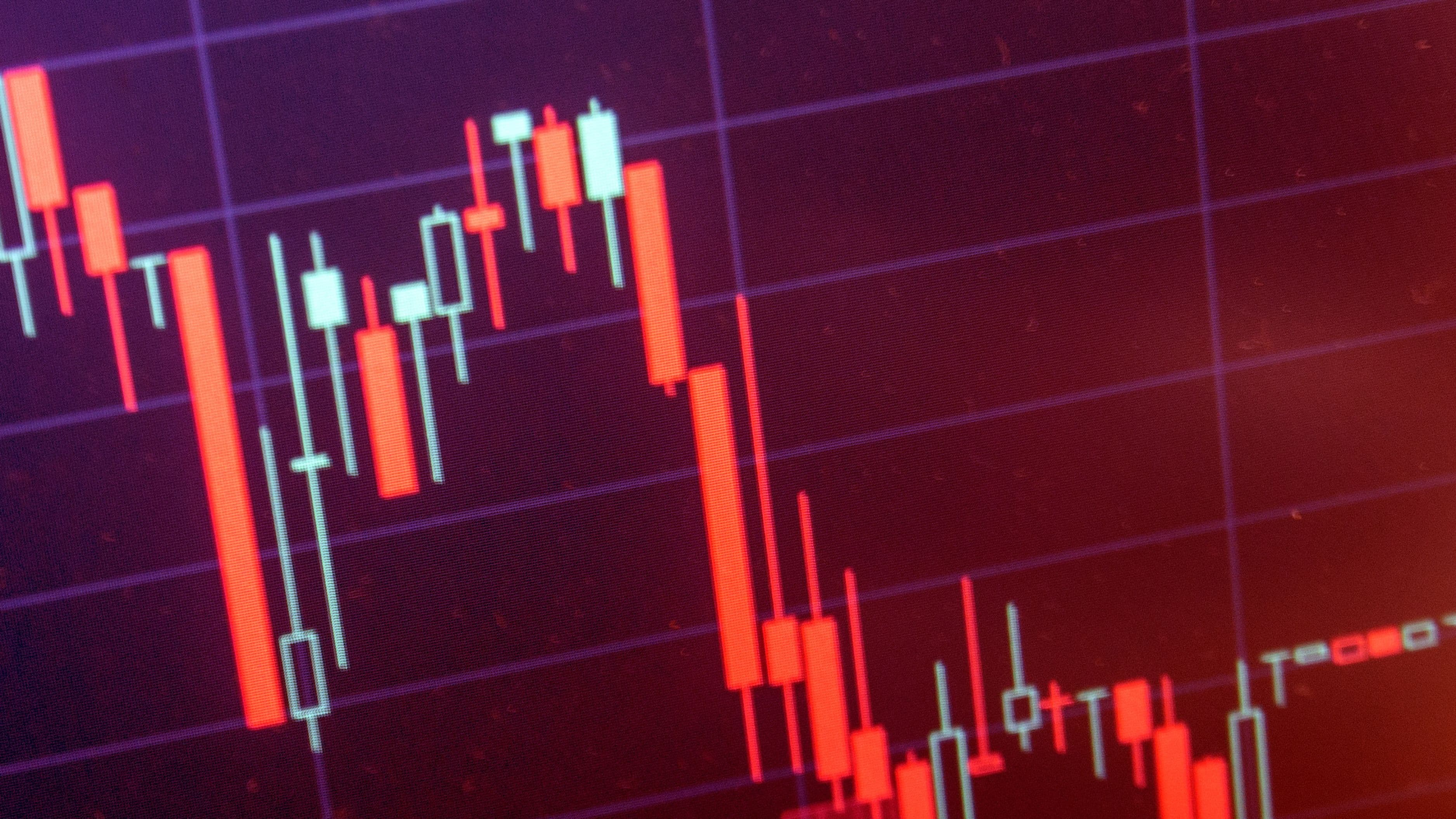
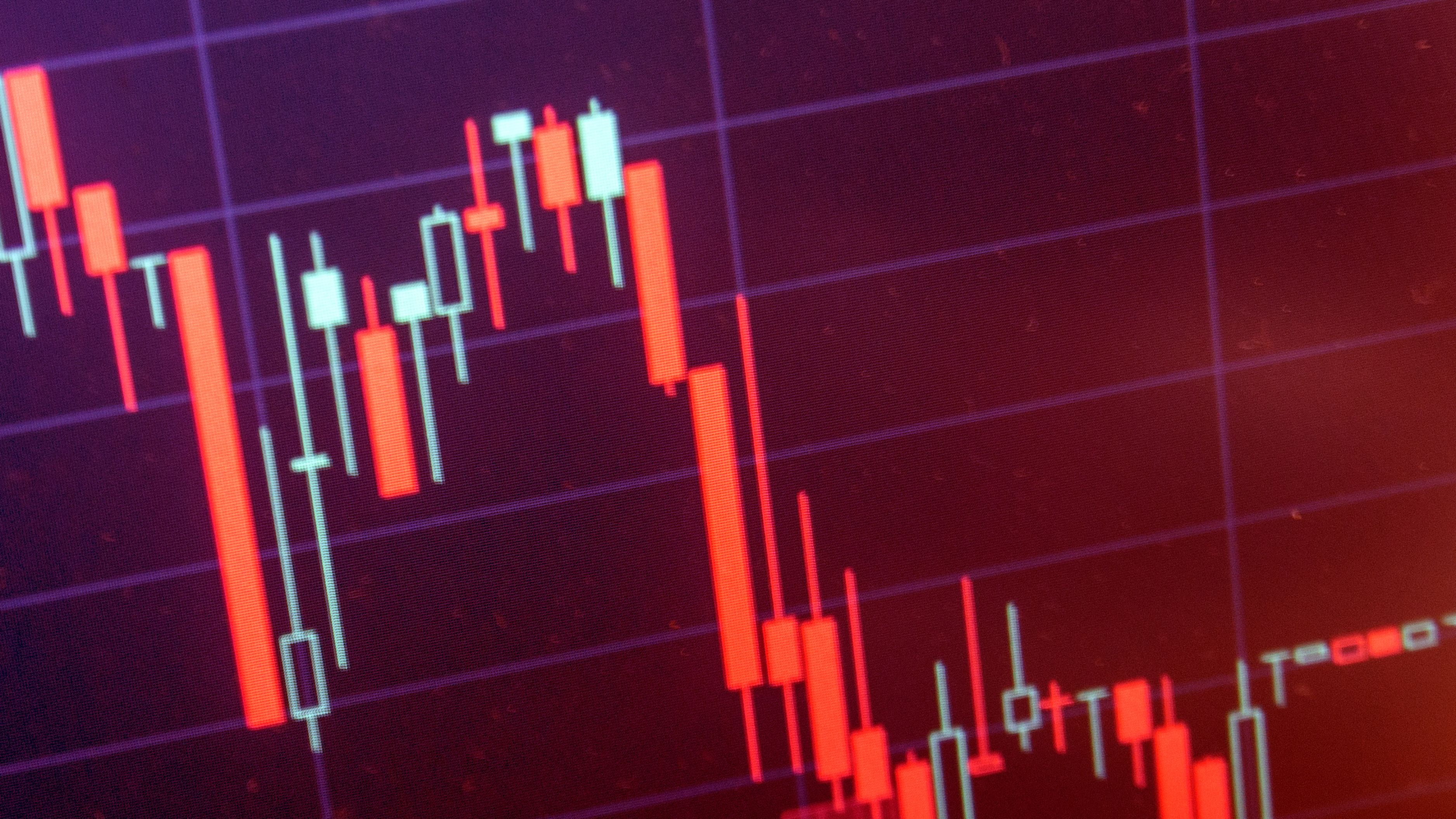
A market drop looks the same on the surface for everyone. What it actually means for your money depends on where that money is, how long you have before you need it, and whether you've realized any losses or just watched the numbers change on a screen.
Your Money Isn't Gone – It Just Changed in Value
The most important thing to understand about a market drop is the difference between a paper loss and a realized loss.
When stock prices fall, the value of your shares decreases – but only on paper. If you hold 100 shares of a fund worth $50 each and the market drops 20%, your shares are now worth $40 each. Your account shows $4,000 instead of $5,000. That's a $1,000 paper loss. But if you don't sell, you still own the same 100 shares. You haven't actually lost anything yet.
A loss becomes real the moment you sell. If you sell those shares at $40, you lock in the $1,000 loss permanently. If you hold and the price recovers to $55, your paper loss turned into a gain without you having to do anything other than wait. This is why the behavior of long-term investors – staying put during drops rather than selling in panic – is so consistently reinforced by data. Selling during a downturn is often what converts a temporary setback into a permanent one.
What's Actually Driving the Drop
Stock prices reflect what investors collectively believe a company or market is worth based on future expectations. When those expectations shift – because of economic data, interest rate changes, geopolitical events, corporate earnings, or simple shifts in market sentiment – prices move accordingly.
A broad market drop doesn't mean every company is suddenly less valuable in a fundamental sense. It often means investors are repricing risk. When uncertainty rises, investors tend to demand a lower price for taking on that uncertainty – so prices fall to find a new equilibrium. Sometimes that repricing is rational and reflects real economic deterioration. Sometimes it's driven by fear and sentiment that overshoots the actual impact of underlying events.
The practical implication is that market drops don't always correspond to equal changes in the actual businesses you own shares of. A company that generates solid revenue and has strong fundamentals can see its share price drop 15% in a broad selloff, not because anything changed in its operations, but because fear drove investors to sell indiscriminately. Over time, prices tend to reconnect with actual business performance – which is one of the key arguments for holding through short-term volatility.
How It Affects Different Types of Accounts
The impact of a market drop on your money varies significantly depending on what type of account you're holding it in.
Your 401(k) or IRA holds investments in the market, so the account balance will decline with the market. But these accounts are designed for decades-long time horizons. Unless you're within a few years of retirement, a market drop in your retirement account is a paper event – and one that may even work in your favor if you're still contributing, since you're buying shares at lower prices with each paycheck deposit. A 30-year-old watching their 401(k) drop 20% is in a fundamentally different situation than a 63-year-old who planned to retire next year.
Taxable brokerage accounts work similarly in terms of paper versus realized losses, but with a tax dimension. If you sell at a loss, you can potentially use that loss to offset capital gains elsewhere in your portfolio or reduce your taxable income by up to $3,000 per year – a strategy called tax-loss harvesting. This doesn't make the loss feel better, but it does mean a down market creates a tax planning opportunity for some investors.
Cash in a savings or money market account is not affected by stock market drops. The FDIC insures deposits up to $250,000 per depositor per institution. This is the primary reason financial advisors consistently recommend keeping an emergency fund in cash rather than in the market – it needs to be accessible and stable when life gets difficult, not correlated to market conditions.
Target-date retirement funds automatically shift toward more conservative allocations (more bonds, less stocks) as you approach the target retirement year. This means a market drop affects someone in a 2050 fund very differently than someone in a 2025 fund – the latter has a much higher bond allocation designed to reduce that volatility.
The Role of Bonds During a Downturn
Bonds don't always move in the same direction as stocks, which is the core reason they're included in diversified portfolios. During a stock market selloff driven by economic fears, investors often move into bonds as a safer haven, which can push bond prices up while stocks fall. This flight-to-safety dynamic means a diversified portfolio typically doesn't fall as far as a pure stock portfolio during a downturn.
The relationship isn't guaranteed – in periods of rising interest rates, both stocks and bonds can fall simultaneously, as many investors experienced in 2022. But over long history, including bonds alongside stocks has generally smoothed out returns and reduced the severity of drawdowns. This is why asset allocation – the mix between stocks, bonds, and cash – matters to your actual experience of a market drop, not just the raw percentage of portfolio decline you'll see reported in headlines.
What Happens If You Keep Investing During the Drop
If you're regularly investing through payroll contributions to a 401(k) or automatic deposits to a brokerage account, a market drop actually works in your favor in one specific way: your regular contributions buy more shares at lower prices. This is the mechanics of dollar-cost averaging.
Say you invest $500 per month into an index fund. When shares are priced at $100, you get 5 shares. When the market drops and shares fall to $80, your $500 buys 6.25 shares. When prices recover, those cheaper shares recover in value too – and you own more of them. Over time, continuing to invest through downturns rather than pausing contributions can meaningfully improve your long-term position relative to investors who stop investing when prices fall.
This is one of the more counterintuitive aspects of long-term investing: a market you plan to invest in for decades is one you benefit from when prices are lower, not just when prices are rising. A younger investor accumulating shares should, in theory, welcome periodic downturns as buying opportunities rather than fear them.
When a Market Drop Does Warrant Concern
Not every market drop is something to sit through calmly. There are real situations where a drop warrants action – just not the panic selling that tends to make things worse.
If you're close to retirement and heavily invested in stocks, a significant market drop can affect your retirement timeline in a meaningful way. This is why the conventional advice is to gradually shift toward more conservative allocations as you approach retirement – not to time the market, but to reduce sequence-of-returns risk (the risk that a major drop hits right at the moment you start drawing down your portfolio). If you're in this situation, a conversation with a financial advisor about your current allocation may be more useful than anything you could do in response to the drop itself.
If the market drop exposes concentration risk – you realize your savings are overwhelmingly in a single stock, your employer's shares, or one sector – that's worth addressing over time through diversification, not through rapid selling during a downturn.
If you're going to need your invested money within the next one to three years for a specific goal – a down payment, tuition, a business purchase – that money probably shouldn't have been in the market in the first place. Needing to sell in a downturn to fund a near-term need is a genuine problem that locks in losses. For near-term savings goals, high-yield savings accounts or short-term CDs are more appropriate than market investments.
What This Means for Your Money Right Now
A market drop changes the number on your screen. What it actually means for your financial situation depends entirely on your timeline and your plan.
If you have a time horizon of five or more years and a diversified portfolio, the most financially sound response to most market drops is to do nothing. Not nothing because you're ignoring it, but nothing because your plan was already built for this. Markets have declined significantly dozens of times in history and recovered every single time – though past recovery doesn't guarantee future recovery, long-term market history does argue for patience over panic.
If the drop is prompting you to look honestly at your risk tolerance and you realize you're more uncomfortable than expected, that's useful information. Adjusting your allocation toward something you can genuinely stay with – rather than something theoretically optimal that causes you to make emotional decisions – is a reasonable outcome of a market correction, as long as the adjustment is made thoughtfully and not in the heat of a single bad week.
Key Takeaways
Paper losses only become real when you sell, and selling during a downturn is typically the action most likely to convert temporary discomfort into permanent loss. Your 401(k) balance falling is not money disappearing – it's the market repricing investments you still own. Cash in FDIC-insured savings accounts is unaffected by stock market drops. Continuing to invest during a downturn means buying shares at lower prices, which can benefit long-term returns. If a drop is causing genuine financial stress, the most useful step is to review your timeline, your allocation, and whether the money at risk matches the actual time horizon you have.
FAQ
Should I move my money to cash when the market drops? For most long-term investors, moving to cash during a market drop locks in losses and creates a new problem: figuring out when to get back in. Research consistently shows that missing even a handful of the market's best days – which often occur during volatile periods – dramatically reduces long-term returns. Cash makes sense for money you need in the near term, not for money you're investing for decades.
How long do market drops usually last? It varies significantly. Brief corrections of 10% or more can resolve within weeks. Bear markets – declines of 20% or more – have historically lasted an average of about 10 months, though the range is wide. Recovery periods vary too. The point isn't to predict duration but to have a plan that doesn't require you to sell during a down period.
Is it safe to keep money in my 401(k) during a crash? Yes, for most people. A 401(k) holds investments in the market, so balances will fluctuate with the market. But the account itself is protected by ERISA, not subject to bank runs, and the investments inside are yours. Continuing contributions and not withdrawing early is the approach supported by long-term retirement investing data.
What if the market never recovers? The US stock market has recovered from every significant decline in its history, including the Great Depression, the 2008 financial crisis, and the COVID crash of 2020. A scenario where the market permanently never recovers would represent a collapse of the broader economy so severe that cash and most other assets would also lose significant value. Diversification across asset types, geographies, and sectors provides some protection against severe scenarios.
Does a market drop affect my Social Security? No. Social Security benefits are not invested in the stock market and are not affected by market performance. The program is funded through payroll taxes and managed by the federal government.
📚 Sources
U.S. Securities and Exchange Commission – Investor Bulletin: Understanding Market Volatility: https://www.sec.gov/investor/alerts/ib_volatility.pdf
FDIC – Deposit Insurance FAQs: https://www.fdic.gov/resources/deposit-insurance/faq/
Fidelity – The Case for Staying Invested: https://www.fidelity.com/learning-center/trading-investing/markets-and-investing/volatility-tips
Vanguard – Dollar-Cost Averaging and Market Downturns: https://investor.vanguard.com/investor-resources-education/article/dollar-cost-averaging
CFPB – What Is a Target Date Fund: https://www.consumerfinance.gov/ask-cfpb/what-is-a-target-date-fund-en-1822/