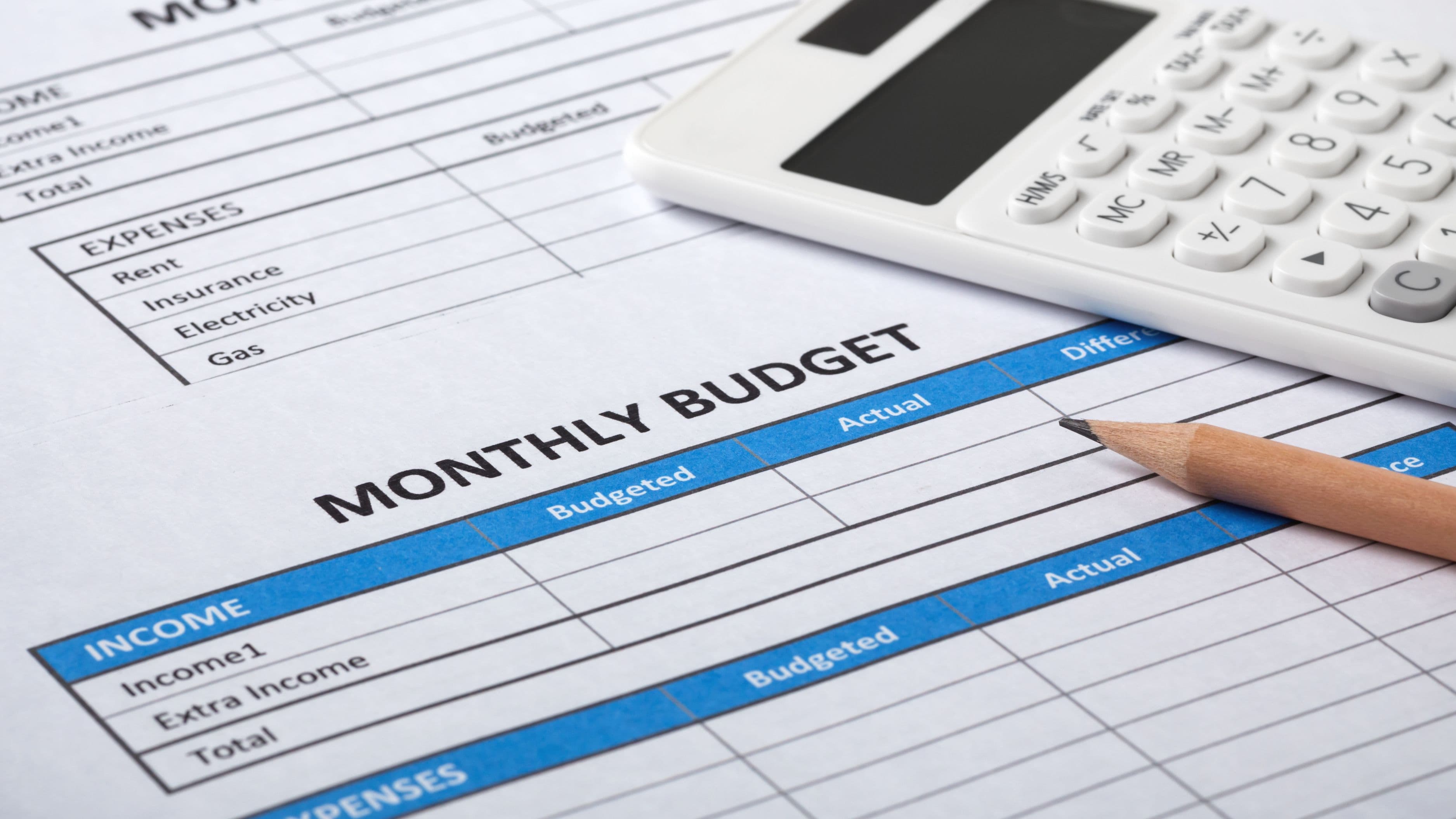



This isn't a willpower problem. It's a design problem. Most budgets fail not because people lack discipline, but because the way they're built makes failure almost inevitable from the start.
The Reasons Budgets Break Down So Quickly
Understanding why budgets fail is the first step toward building one that doesn't. The patterns are consistent and almost universal.
The math is too perfect. Most first-time budgets are built on what income and expenses should be in an ideal month – which doesn't exist. Real months have irregular expenses: annual subscriptions that hit in January, car registration in spring, holiday spending in December, a random medical copay in July. When none of these show up in your month-one budget, the budget breaks on contact with reality.
Categories are too broad. "Food" as a single budget line doesn't tell you whether you're overspending on restaurants, groceries, or both. "Miscellaneous" is where budgets go to die. The broader the category, the harder it is to know which spending is actually the problem – and the easier it is to mentally justify everything under a vague label.
The numbers aren't based on real data. Most people estimate what they think they spend rather than tracking what they actually spend. The gap between those two numbers is usually significant, and often eye-opening. A budget built on guesswork will be wrong in ways that feel like failure even when you're doing everything right.
It's all restriction, no flexibility. A budget that leaves no room for anything unplanned treats every unexpected expense as a budget failure. Life doesn't cooperate with that framing, and after enough "failures," most people give up entirely rather than adjusting a system that was too rigid from the start.
What to Do Instead: Build a Budget Around Reality
The solution isn't more discipline – it's a different structure. Here's how to build a budget that survives contact with an actual month.
Start With One Month of Real Tracking
Before you assign a single spending limit, spend 30 days tracking every dollar that goes out. Not planning, not estimating – tracking. Most banks and credit unions offer spending categorization in their apps. You can also use a free tool like Mint or YNAB's trial period to capture everything in one place.
This gives you a real baseline. You'll find out how much you actually spend on food, not how much you think you do. You'll catch subscriptions you forgot about. You'll see the irregular expenses you wouldn't have thought to budget for. That data is far more valuable than any budget template downloaded from the internet, because it's built on your actual financial life.
Account for Irregular Expenses Upfront
One of the most effective budgeting techniques that most beginners skip is sinking funds – a dedicated savings line for irregular but predictable expenses. Instead of letting car registration or holiday gifts blow up your budget in the month they occur, you calculate the annual total, divide by twelve, and set that amount aside every month. By the time the expense hits, the money is already there.
Think through your irregular expenses for the whole year: insurance premiums, annual subscriptions, vehicle maintenance, gifts, travel, back-to-school costs, tax payments if you're self-employed. The total is usually larger than people expect. Distributing those costs monthly makes your budget far more accurate and far less likely to be derailed by "surprise" expenses that aren't actually surprising at all.
Use the 50/30/20 Framework as a Starting Point – Not a Rulebook
The 50/30/20 rule – 50% of take-home pay to needs, 30% to wants, 20% to savings and debt – is one of the most widely cited budgeting frameworks, and it's a reasonable place to start. But it's a guideline, not a law. If you live in an expensive city, your housing costs alone might consume 40% of your income, which means the math doesn't work without adjustment.
Use it as a diagnostic tool rather than a rigid target. If needs are consuming 70% of your income, that tells you something important: either your income needs to increase, or you need to make some structural changes to your biggest fixed expenses – housing, car payments, debt minimums. Those conversations are uncomfortable but more useful than trying to squeeze entertainment spending to compensate for a too-expensive apartment.
Build in a Buffer Line
Every budget needs a line item called something like "buffer," "unexpected expenses," or "life happens." Start with $50–$100/month if your budget is tight, more if you can manage it. This isn't an emergency fund – it's a planned allowance for the small unplanned things that will definitely happen: a parking ticket, a last-minute birthday gift, a copay, a grocery run that went over.
Having this line transforms the experience of the inevitable deviation. Instead of "I went over my grocery budget, the budget is ruined," it becomes "I dipped into the buffer, which is what it's there for." The psychological difference is significant. Budgets fail in large part because small failures feel like total failures. A buffer prevents that spiral.
Track Weekly, Not Monthly
Checking your budget once at the end of the month is like weighing yourself only on New Year's Day. By the time you see the result, there's nothing you can do about it. A quick weekly check – 10 minutes, not a full audit – lets you see early in the month if a category is running hot and adjust before it blows up.
This doesn't need to be complicated. Many budgeting apps (YNAB, Copilot, Monarch Money) do most of the categorization automatically. You're just doing a brief review: where am I in each category, what's coming up this week, do I need to move money from one category to another? That 10-minute habit is more valuable than any spreadsheet formula.
The Zero-Based Budgeting Approach
Zero-based budgeting – the method that YNAB is built around – is worth understanding because it directly addresses the biggest failure mode of traditional budgeting. The core principle: every dollar of income gets assigned a job before you spend it. Income minus all assigned expenses and savings equals zero. You're not restricting spending; you're deciding in advance where everything goes.
This sounds rigid but it's actually more flexible than standard category budgets because it forces you to make active decisions about tradeoffs. If you want to eat out more this week, you move money from another category. The budget becomes a living document you interact with regularly rather than a plan you make once and measure yourself against. That interaction is what makes it work.
YNAB is the most popular tool for zero-based budgeting – it costs around $14/month or $99/year, which is worth it for many users given how much the method can improve financial clarity. There's also a free version of the approach you can implement manually in a spreadsheet if you prefer not to add another subscription.
What It Means for Your Money
Getting budgeting right isn't just about avoiding overspending in any given month. A budget that actually works compounds over time. When you stop the slow leak of untracked spending, that money has somewhere better to go – an emergency fund that removes financial anxiety, debt that gets paid down faster, savings that start building actual momentum.
The first working budget most people build isn't perfect. It takes two or three months of iteration before the categories feel right, the irregular expense estimates are accurate, and the weekly check-in feels natural rather than dreaded. That iteration is normal. The goal isn't a perfect month-one budget; it's a system that gets better every month because you're actually using it.
Key Takeaways
Track before you budget – one month of real spending data is worth more than any template. Account for irregular expenses every month through sinking funds rather than letting them blow up your budget when they hit. Build a buffer line into every budget as a planned allowance for life's small surprises. Check your budget weekly, not just at month end, so small issues don't become big ones. And treat the first two or three months as calibration, not a test of your discipline.
FAQ
How long does it take to build a budget that actually works? Most people find their budget starts feeling accurate and manageable after two to three months of active use. The first month reveals what you underestimated; the second month lets you adjust; the third month starts feeling natural.
What's the best free budgeting app? Mint (free, but ad-supported) and YNAB (paid, but with a 34-day free trial) are the most widely used. If you prefer not to link financial accounts to an app, a Google Sheets budget template works just as well for manual tracking. The best tool is the one you'll actually use consistently.
Should I budget to the dollar or keep it loose? Somewhere in between works for most people. Budgeting to the dollar across every category creates brittleness – one small deviation feels like failure. Keeping it too loose means categories lose meaning. Aim for specific targets in your high-impact categories (housing, food, debt) and a consolidated buffer for everything smaller.
What if my income is irregular? Budget from your lowest expected monthly income as a baseline, not your average. In higher-income months, direct the excess to savings or debt before spending it. This prevents building a lifestyle around income that won't always be there.
Is budgeting still necessary if I'm saving money each month? Possibly not in a rigid sense – but most people who think they're saving enough discover through tracking that they could save significantly more with minimal lifestyle impact. Knowing where your money goes, even without strict category limits, is valuable regardless of your savings rate.
📚 Sources
Consumer Financial Protection Bureau – Making a Budget: https://www.consumerfinance.gov/consumer-tools/budget-tool/
YNAB – How You Need a Budget Works: https://www.ynab.com/the-four-rules
U.S. Federal Reserve – Report on the Economic Well-Being of U.S. Households: https://www.federalreserve.gov/publications/report-economic-well-being-us-households.htm
NerdWallet – What Is the 50/30/20 Budget Rule: https://www.nerdwallet.com/article/finance/nerdwallet-50-30-20-budget-calculator
Investopedia – Zero-Based Budgeting: https://www.investopedia.com/terms/z/zbb.asp